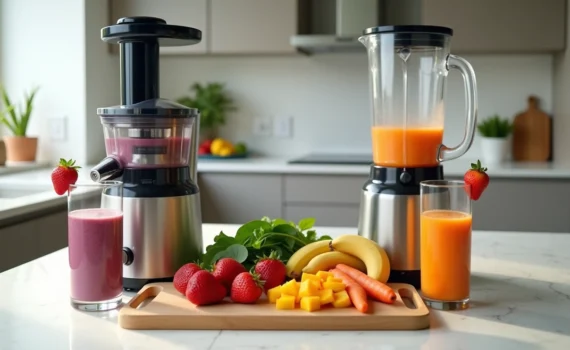
Yes, some juicers can make smoothies, but traditional centrifugal juicers cannot. High-end slow masticating juicers, such as Kuvings or Hurom, can produce smoothies when fitted with a large-hole smoothie strainer that retains pulp and fiber. This setup creates a thick, creamy texture instead of separated juice. Juicer vs Blender: What’s […]
Monthly Archives: February 2026
56 posts
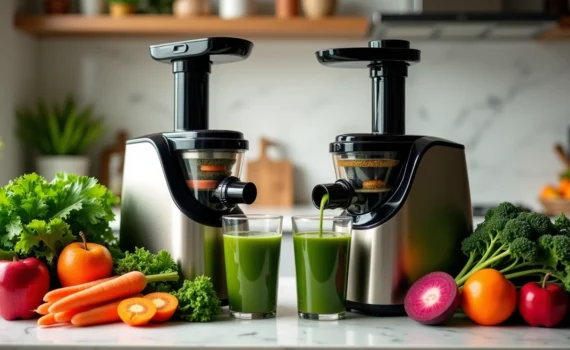
The main difference between cold press juicer vs masticating juicer is terminology and mechanism. Most home cold press juicers are masticating juicers that operate at 80–100 RPM using a slow auger to extract juice without heat. True cold press machines can use hydraulic presses. Both preserve nutrients, handle leafy greens […]
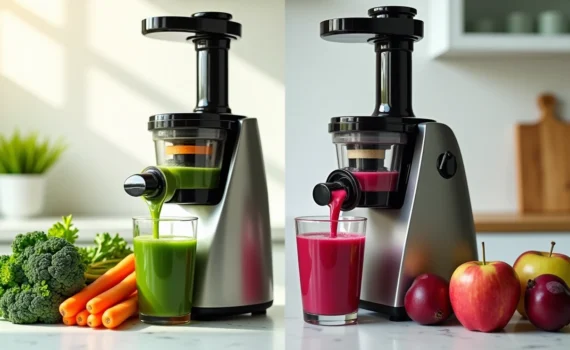
The main difference between centrifugal or masticating juicer is speed versus juice quality. Masticating juicers operate at 40–100 RPM, maximize nutrient retention, and produce higher yields, especially for leafy greens. Centrifugal juicers spin at 6,000–14,000 RPM, juice faster, and cost less. Choose masticating for daily, high-quality juicing and centrifugal for […]
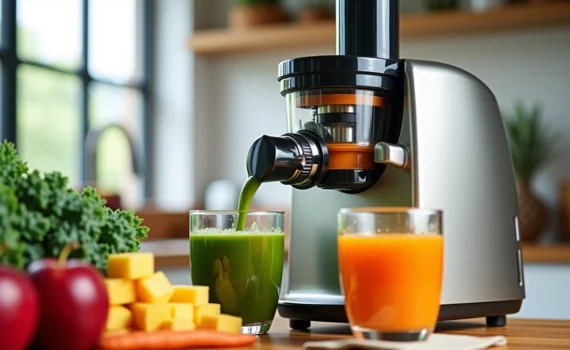
A cold press juicer is a masticating juicer that extracts juice by slowly crushing and pressing fruits and vegetables with an auger instead of high-speed blades. This process generates minimal heat, preserves heat-sensitive nutrients and enzymes, increases juice yield, reduces foam, and extends shelf life up to 72 hours when […]
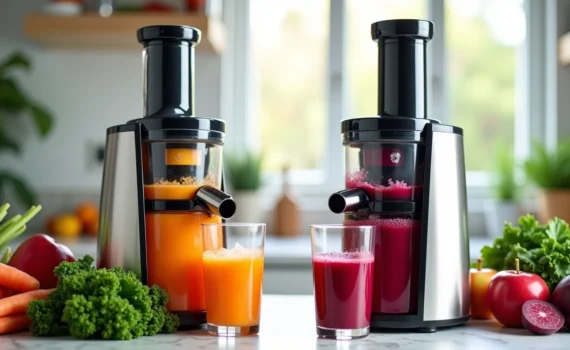
A slow juicer is a cold-press juicer that crushes and presses fruits and vegetables at 30–200 RPM to extract juice. It uses a slow-rotating auger instead of high-speed blades, which reduces heat and oxidation. This process increases nutrient retention, improves juice yield, and produces less foam. What is a Slow […]
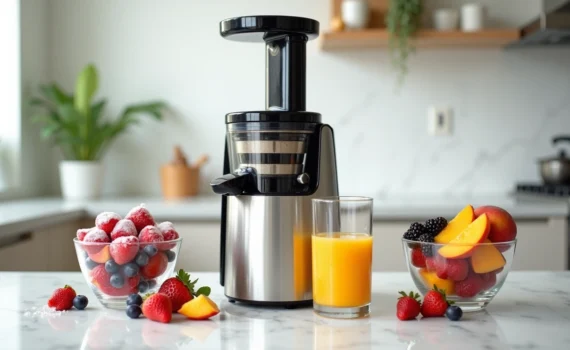
Yes, you can put frozen fruit in a juicer, but thaw it for 30–60 minutes first to prevent motor strain and thick puree buildup. Most centrifugal juicers require thawed fruit. Some masticating juicers can process frozen fruit, often producing a sorbet-like texture instead of clear juice. Can You Put Frozen […]
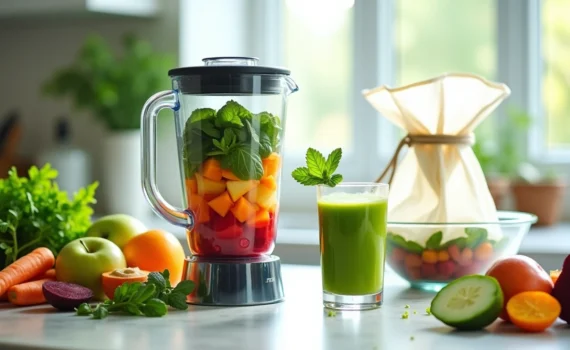
Yes, you can juice without a juicer by using a blender and a straining method. Blend fruits and vegetables with 120–240 milliliters of water, then strain the mixture through a nut milk bag, cheesecloth, or fine mesh strainer. Squeeze firmly to extract as much liquid as possible. Tools You Need […]
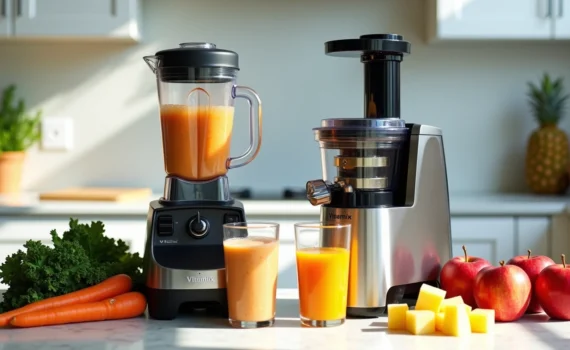
A Vitamix is a high-performance blender, not a traditional juicer. Vitamix blends whole fruits and vegetables with 240–480 milliliters of water to create a whole-food drink that contains pulp. A juicer separates pulp from juice, while a Vitamix retains fiber unless you strain it through cheesecloth or a nut milk […]
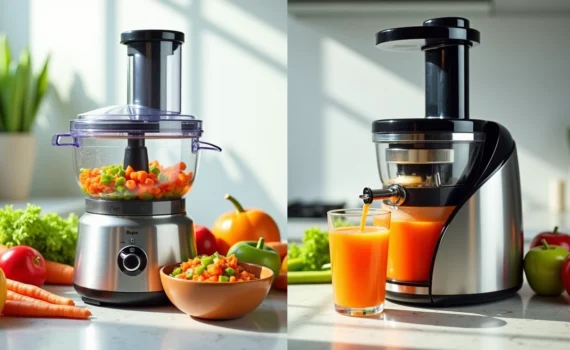
The main difference between food processor vs juicer is function and output. A food processor chops, slices, grates, and mixes solid foods for meal preparation. A juicer extracts liquid from fruits and vegetables and separates the pulp. Choose a food processor for cooking versatility and a juicer for dedicated juice […]
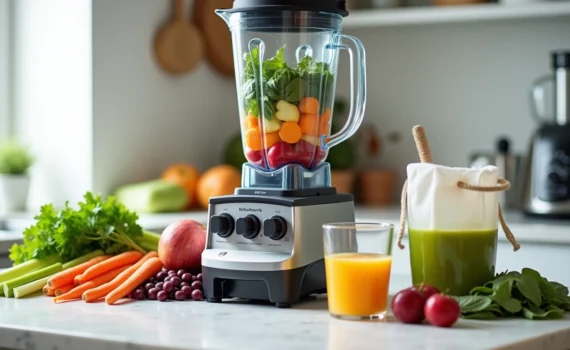
Yes, a blender can be used as a juicer by blending fruits and vegetables with 120–240 milliliters of water, coconut water, or juice, then straining the mixture through a nut milk bag, cheesecloth, or fine mesh strainer. Use a high-powered blender to produce a smoother, drinkable juice with minimal pulp. […]