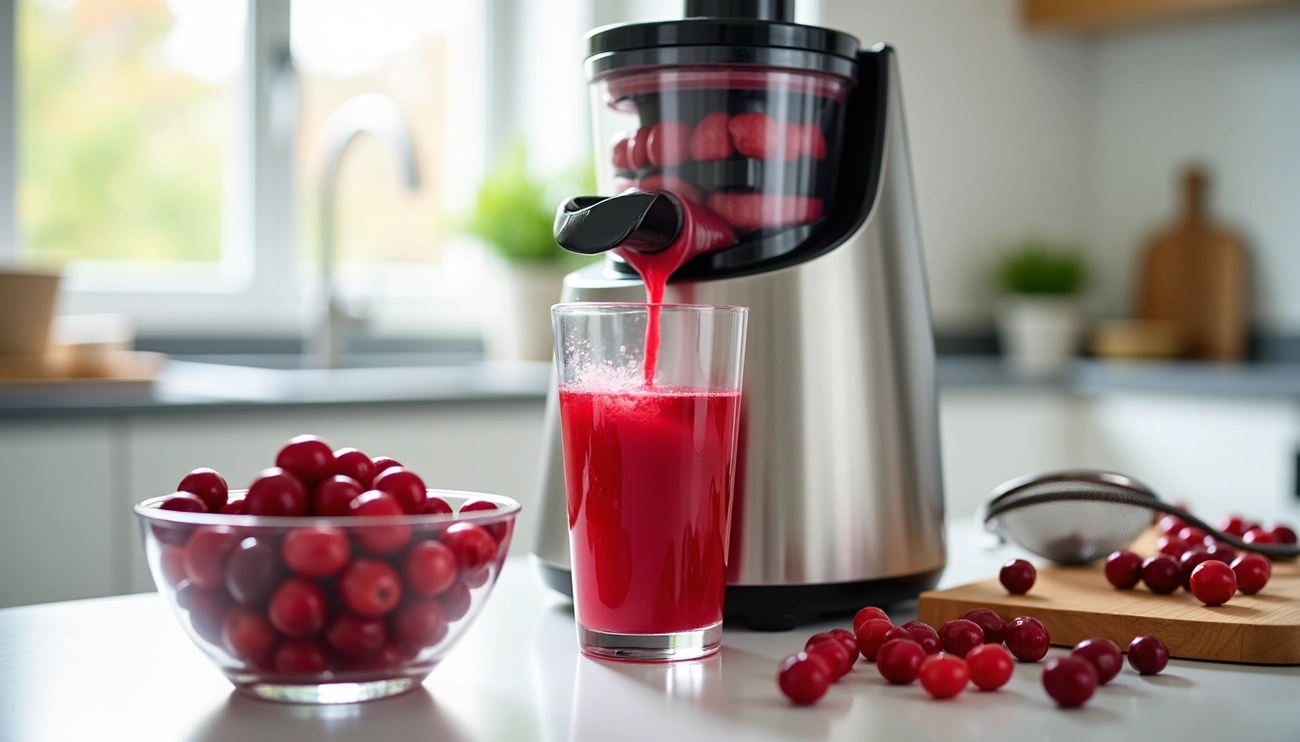
Yes, You can juice fresh or thawed cranberries in a juicer to create a nutrient-dense, tart juice rich in antioxidants and vitamin C. Cranberries work best in cold-press or slow juicers. Mix cranberries with sweeter fruits like apples or pineapple to balance their intense sour flavor and improve taste.
Can you juice cranberries in a juicer?
Yes, cranberries are excellent candidates for juicing in a standard juicer. These small, tart berries pack a powerful nutritional punch, offering abundant antioxidants that help prevent certain cancers, decrease blood pressure, improve digestion, boost immunity, and prevent gum disease.
Juicing fresh vs frozen cranberries
While both fresh and frozen cranberries can be processed through a juicer, each option offers unique advantages. Fresh cranberries provide immediate convenience, whereas frozen cranberries must be thawed before juicing—typically about two hours in the refrigerator.
Interestingly, freezing cranberries for at least a week reduces their pectin content by approximately half. Since pectin creates a gel-like consistency, this reduction is actually beneficial for juice production, potentially resulting in a less viscous final product.
According to professional bartenders, frozen berries often yield more consistent juice than fresh ones, especially considering fresh cranberries are typically available for only six to eight weeks annually. A pound of either fresh or frozen cranberries should produce approximately two cups of juice.
Can you juice cranberries in a cold press juicer?
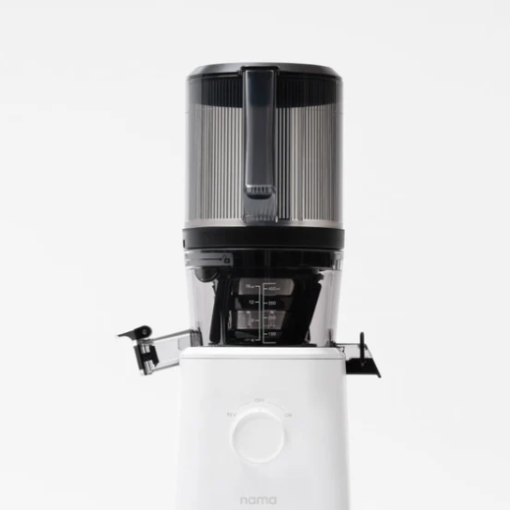
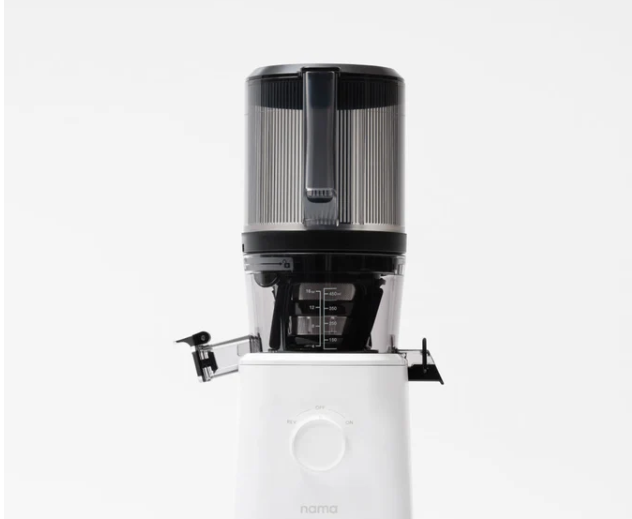
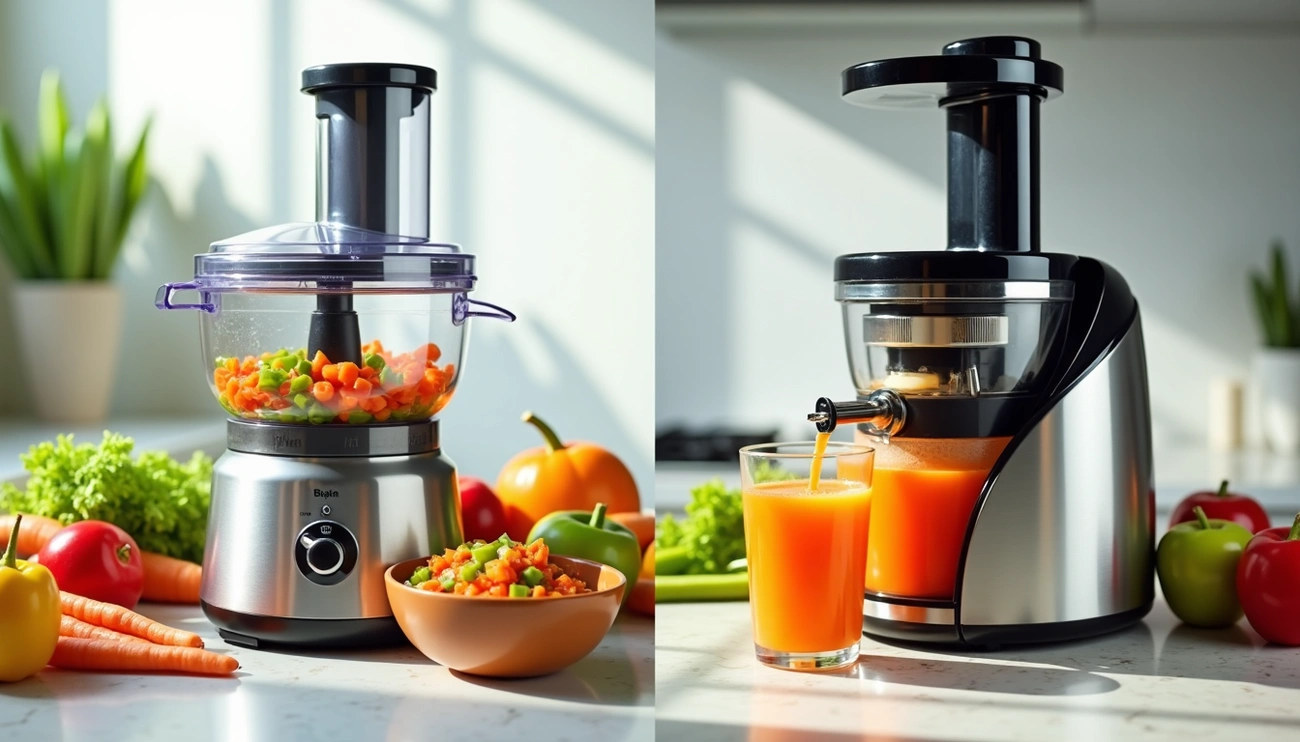
Cold press juicers (also called slow juicers or masticating juicers) are particularly effective for cranberries. These machines squeeze produce slowly and at high pressure, preserving more nutritional value while delivering authentic cranberry flavor.
Moreover, cold press juicers typically extract more juice than centrifugal models when processing small berries like cranberries. For those seeking maximum potency, especially for UTI treatment purposes, cold-pressed cranberry juice is often recommended.
What to expect in terms of taste and yield
Pure cranberry juice has an intensely tart and somewhat bitter flavor profile. Without modification, many find it too strong to consume straight. Consequently, commercial producers often add sweeteners or blend cranberries with sweeter fruits.
Home juicers can follow this approach by juicing apples alongside cranberries. As a general guideline, using equal parts cranberries and apples creates a balanced base that can be adjusted to taste. If your juice remains too sour or bitter, simply add more apples to increase sweetness.
Regarding yield, cranberries produce a relatively small volume of juice compared to juicier fruits. The resulting liquid is often concentrated and may benefit from dilution with water depending on your preference and intended use.
Three ways to juice cranberries at home
Beyond using a standard juicer, there are several effective alternative methods for extracting juice from cranberries. These traditional approaches often yield excellent results with minimal equipment.
Method 1: Canning whole cranberries with sugar
This method requires no actual juicing equipment yet produces delicious juice through a simple infusion process. Add approximately 1 1/2 to 1 3/4 cups of whole cranberries to each quart jar, followed by 1/4 to 1/2 cup sugar. The sugar plays a crucial role by pulling the juice and flavor from the berries. Pour boiling water over the cranberries and sugar, leaving 1/2 inch headspace. Process the jars in a water bath canner for 25 minutes at elevations under 1,000 feet. Although technically you’re canning berries rather than juice, these sealed jars must sit for 4-6 weeks to allow the cranberries to fully infuse the sugar-water mixture.
Method 2: Boiling and straining cranberries
This traditional approach involves cooking cranberries until they burst, then extracting their juice. Begin by combining cranberries with water in a pot and bringing to a low boil. Continue boiling until the cranberries pop, approximately 10 minutes. Next, strain the mixture through a fine sieve or cheesecloth, pressing gently on the berries to extract maximum juice. For best results, perform multiple extractions with the same cranberry pulp – after the initial straining, return the pulp to the pot with fresh water for two additional rounds of extraction. This process typically yields about 7 quarts of juice from 3 pounds of cranberries.
Method 3: Using a steam juicer
A steam juicer extracts juice through heat and condensation, producing exceptionally clear results. This three-tiered device consists of a water reservoir at the bottom, a juice collection pan in the middle, and a perforated colander on top. Fill the bottom with water, place cranberries in the top section, and heat until steam rises through the system. As the cranberries heat, they release their juice, which flows down into the collection chamber. Many home canners prefer this method because it produces beautifully clear juice without sediment, eliminating the need for straining through cheesecloth. Furthermore, the resulting juice can be consumed immediately or processed for longer storage.
How to juice cranberries in a juicer: Step-by-step
Now let’s walk through the practical process of juicing these tart berries with your home juicer. Despite their firmness, cranberries can yield flavorful juice with the right approach.
Step 1: Prep your cranberries
First, rinse cranberries thoroughly under cool water, removing any stems, spoiled berries, or debris. If using frozen cranberries, thaw them slightly or use them directly depending on your juicer’s capabilities. For a 1-quart batch, prepare approximately 1 pound of cranberries.
Step 2: Choose your juicer type
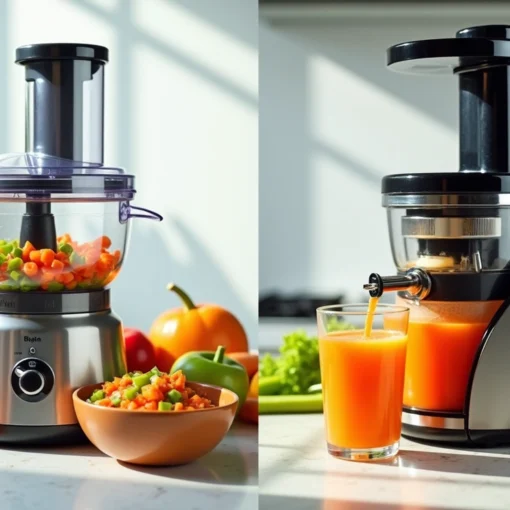
Powerful slow juicers work best as cranberries are quite firm and dry when raw. Standard centrifugal juicers can process cranberries but may yield less juice. Cold press juicers typically extract more liquid while preserving nutrients.
Step 3: Run cranberries through the juicer
Feed cranberries into your machine gradually. Many people add apples alternately with cranberries for better taste and yield. Initially, cranberries alone will produce a concentrated, tart liquid.
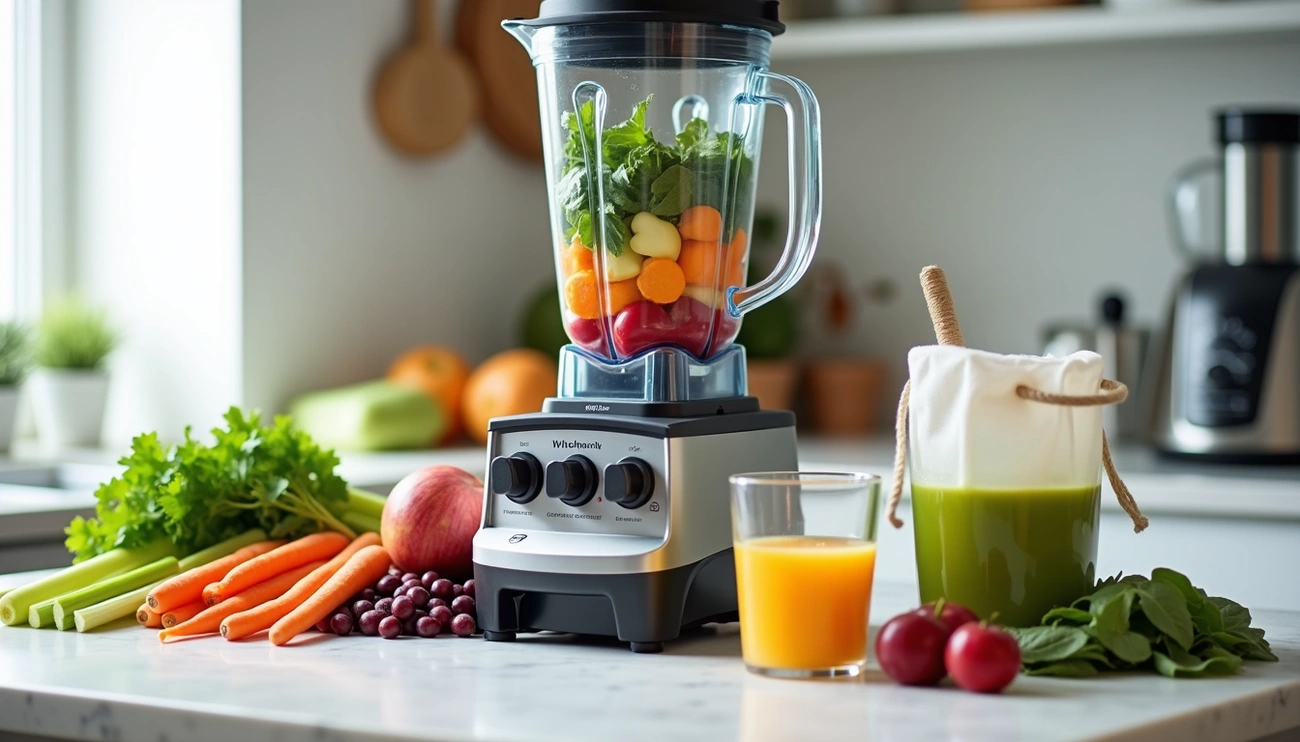
Step 4: Strain and store the juice
Once extracted, pass the juice through a fine sieve for clearer results. Fresh cranberry juice stays good refrigerated for 2-3 days in an airtight container.
Step 5: Optional sweetening and dilution
Pure cranberry juice tastes intensely tart. Consider adding honey, sugar, or agave nectar to taste. Alternatively, dilute with water or mix with sweeter juices like apple for balance.
Storage, safety, and shelf life tips
Proper storage plays a vital role in maintaining the quality of freshly juiced cranberries. Let me share some practical advice for keeping your cranberry juice fresh and safe.
How long does homemade cranberry juice last?
Freshly juiced cranberries stored in the refrigerator typically last 7-10 days. Home-canned cranberry juice maintains quality for 12-18 months when properly sealed. Interestingly, unopened cranberry juice doesn’t technically spoil—it begins fermenting instead. For extended storage, freezing works exceptionally well, with frozen cranberry juice remaining safe indefinitely, though best consumed within a year.
Canning and preserving cranberry juice
For water bath canning, leave 1/4 inch headspace in jars. Process cranberry juice for 15 minutes, adjusting for altitude. After canning, remove rings once jars have cooled to better detect seal failures. Home-canned juice reaches peak flavor after 4-6 weeks of infusion time.
Using pH strips for safety
Cranberries naturally have high acidity (pH 2.3-2.6), making them approximately 100 times more acidic than the 4.6 safety threshold required for water bath canning.
Best containers for storage
Store opened juice in airtight containers away from direct sunlight. High temperatures accelerate spoilage, so keep juice in cool environments. For frozen juice, leave about half an inch of headspace to allow for expansion.
Conclusion
Juicing cranberries at home offers a wonderful way to enjoy these nutritious berries beyond their typical seasonal appearances. Throughout this guide, we’ve seen that cranberries work exceptionally well in juicers despite their firm texture. Their impressive health benefits—from immune support to UTI prevention—make them worth the effort.
Fresh cranberries certainly provide convenience, though frozen berries often yield more consistent results. Additionally, cold press juicers extract maximum juice while preserving more nutrients compared to centrifugal models. The intensely tart flavor might surprise you at first, but this can easily be balanced with apples or a touch of sweetener.
Beyond standard juicing, we’ve explored three alternative methods that work wonderfully. The canning method creates a delightful infusion over several weeks, while boiling and straining offers a quick traditional approach. Steam juicing stands out for producing exceptionally clear juice without sediment.