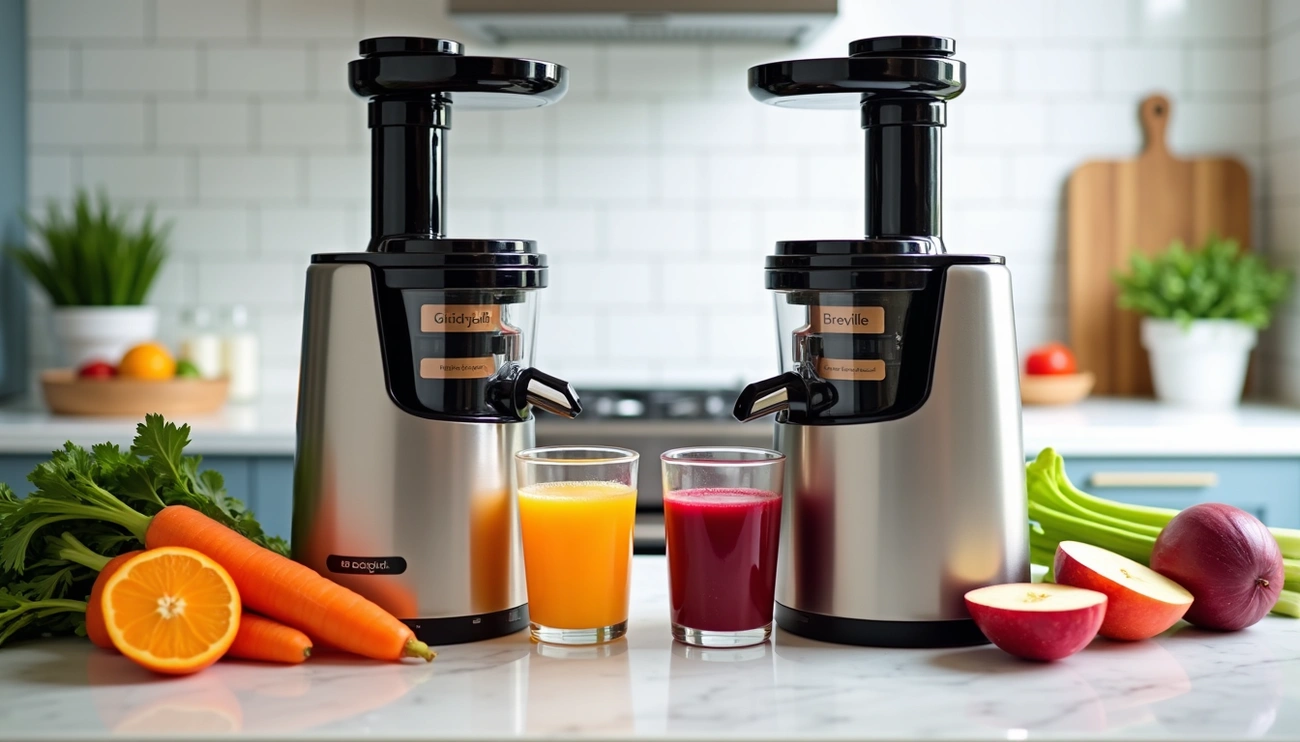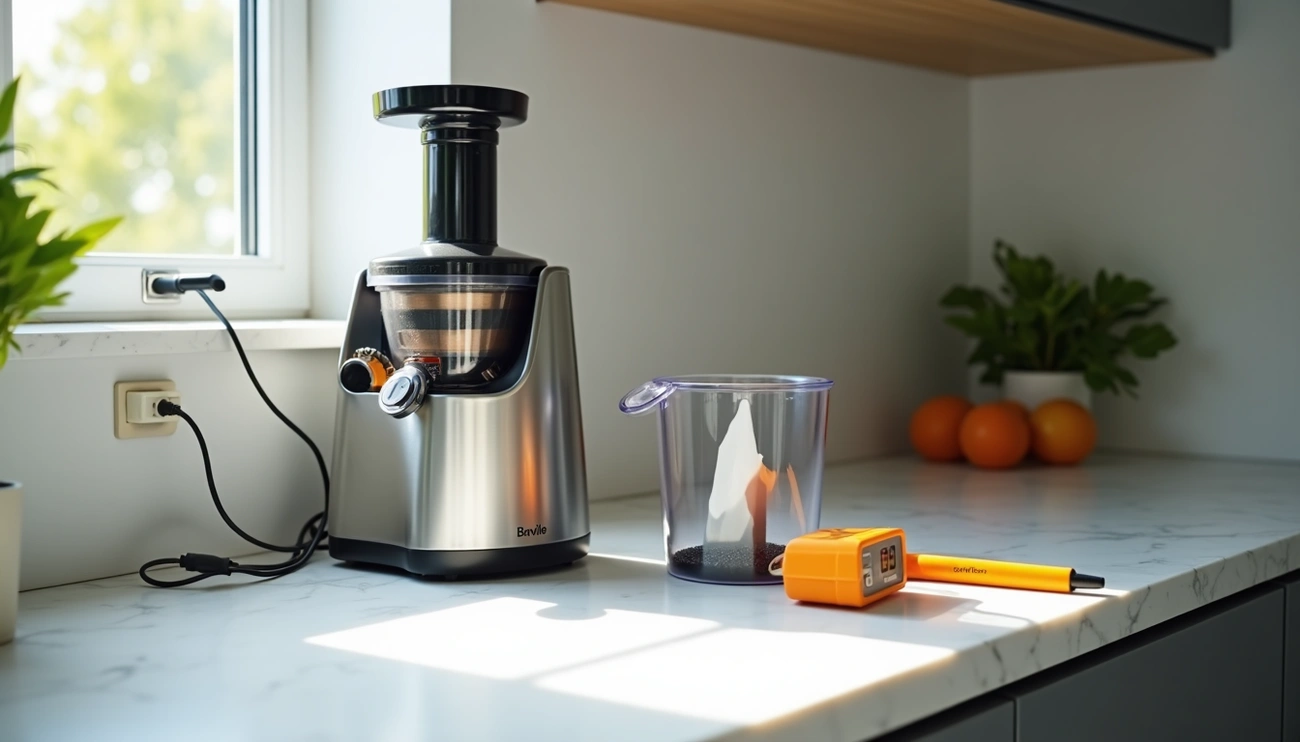
A Breville juicer that is not turning on is usually caused by an unlocked safety arm, an overloaded motor, or a tripped thermal fuse. Lock the safety arm into the full vertical position, unplug the unit, and let it cool for 15–30 minutes. Remove debris to restore power.
Check the Basics First
When troubleshooting a Breville juicer not turning on, always start with the most fundamental checks. These basic steps often resolve the issue without requiring advanced technical knowledge or special tools.
Is the juicer plugged in properly?
This might seem obvious, but loose connections are frequently the culprit behind unresponsive appliances. First, ensure the power cord is firmly inserted into both the wall outlet and the juicer base. Additionally, check if the electricity supply matches what’s shown on the label underneath your appliance. Breville juicers are designed to work with specific voltage requirements, and improper electrical supply can prevent them from powering up.
Furthermore, many users forget that Breville juicers come equipped with grounding plugs for safety. These must be used with properly grounded outlets. In case you’re uncertain about whether your outlet is correctly grounded, consulting with a qualified electrician is recommended.
Test the wall outlet with another device
A faulty wall outlet is often overlooked yet commonly responsible for juicer power issues. To determine if your outlet is working:
- Unplug your Breville juicer
- Plug in another device (like a lamp or phone charger)
- See if the second device powers on
Most outlets in North America should read either 120V or 240V. Readings that differ from these values suggest potential problems with the outlet or its wiring. In certain scenarios, you might have a tripped circuit breaker affecting that particular outlet. Consequently, checking your home’s electrical panel and resetting any tripped breakers might resolve the issue.
Inspect the power cord for damage
Power cords endure significant wear over time, especially in busy kitchens. Carefully examine your juicer’s cord from end to end, looking particularly for:
- Frayed or exposed wires
- Bent or damaged plugs
- Corrosion on metal connections
- Any visible cuts or kinks in the cable
Even minor cord damage can prevent electrical flow to your juicer. Regularly inspecting the power cord and actual appliance for damage is important – if found to be damaged in any way, immediately stop using the appliance. For safety reasons, damaged cords typically require professional replacement rather than DIY repairs.
Remember to turn the appliance off and unplug it from the outlet when not in use, especially before cleaning or disassembling parts.
Safety Mechanisms That Stop Power
Breville juicers incorporate several safety features that prevent operation even when everything else seems fine. Understanding these mechanisms can often solve the mystery of why your juicer refuses to power on.
Check the safety locking arm
The safety locking arm serves as a primary protection feature on Breville juicers. If not correctly positioned, your juicer simply won’t start. This arm must be securely fixed in the vertical position, snapped into the two grooves on either side of the juicer cover. You should hear a distinct “click” when it’s properly engaged. This design ensures the juicer operates only when properly assembled.
Ensure the lid is aligned correctly
Even with the locking arm engaged, improper lid alignment can trigger safety shutoffs. Breville designs their juicers to require perfect assembly before operation. The lid must be clamped securely in place before turning on the motor. Moreover, attempting to unfasten the interlock arm while the juicer is running will automatically stop operation.
Look for the internal safety switch
Beyond visible components, Breville juicers contain internal safety mechanisms. These switches detect whether all parts are correctly positioned. Specifically, some models feature a patented dual safety switch that prevents the cone from spinning until both the arm is lowered and sufficient pressure is applied. This hidden feature often explains why a seemingly properly assembled juicer won’t start.
How the juicer arm affects power flow
The connection between the juicer arm and power flow is critical. In some cases, an internal breaker contact fails to engage when the arm is snapped into place. First, listen for a “click” when securing the arm. If absent, the breaker contact might need adjustment. This typically involves removing the bottom cover and examining the contact beneath the arm’s internal spring hinges. Occasionally, the contact base needs repositioning to properly connect when the arm is engaged.
Remember that these safety features exist to protect both the appliance and user from potential hazards during operation.
Internal Issues That Cause Failure
After ruling out basic power issues and safety mechanisms, it’s time to examine the internal components of your Breville juicer. These hidden elements often hold the key to resolving persistent power problems.
Blown fuse: how to identify and replace
If your Breville juicer remains completely inoperable despite checking external factors, a blown fuse might be the culprit. Initially, ensure the juicer is turned off and unplugged for safety. Accessing the fuse typically requires removing the bottom cover of your appliance. Look for a small cylindrical component on the circuit board that may appear discolored or have a broken filament inside. Replacement involves unsoldering the old fuse from the circuit board and soldering a new one in its place.
Alternatively, some models have thermal fuses located under the fabric covering the black wire connected to the motor. To test this fuse, measure its resistance with a multimeter – a working fuse shows low resistance, whereas a blown one displays high or open resistance.
Loose or misaligned breaker contact
Sometimes, the internal breaker contact fails to engage properly with the juicer arm’s hinge. Essentially, this prevents the electrical circuit from completing. You should hear a distinct “click” when the arm snaps into place – no sound indicates a likely contact problem.
To fix this issue, remove the bottom cover and locate the contact positioned below one of the arm’s internal spring hinges. Try loosening the single screw of the breaker contact base to adjust its position.
Motor overload protection: what it means
Motor overload protection serves as a vital safety feature that prevents damage from excessive strain. This typically takes the form of a thermal fuse that protects you from motor overload that could potentially cause fires. Unlike regular fuses, thermal fuses react to heat rather than current, so they require crimping rather than soldering during replacement.
Signs of a faulty circuit board
Indications of circuit board problems include intermittent power, the speed controller malfunctioning, or complete failure to turn on. Given the complexity of circuit board issues, this may require professional repair, especially for units still under warranty.
When Cleaning and Maintenance Matter
Maintenance issues frequently cause power problems in Breville juicers, often mistaken for electrical failures. Understanding these cleaning-related issues can save you time and frustration.
Clogged filter basket and its effects
A clogged filter basket significantly impacts juicer performance. Even if your juicer turns on, you’ll notice less juice extraction and wetter pulp. The fine mesh pores become blocked with fruit sugars and tiny fibers, preventing juice passage. This blockage forces the motor to work harder, eventually triggering automatic shutdown.
Pulp buildup under the lid
Wet pulp accumulated under the juicer cover commonly causes motor stalling. If the juicer seems to labor or suddenly stops, excess pulp might be the culprit. This buildup can trigger safety mechanisms that cut power completely, making it appear as though your juicer won’t turn on.
How dirty parts can trigger shutdown
Your Breville juicer includes automatic protection against motor overload. According to Breville’s manual, the juicer will automatically stop operating if too much food is processed without cleaning. Accumulated residue leads to clogged filters that can’t juice efficiently, unpleasant odors, and potentially shortened appliance lifespan due to motor strain.
Cleaning tips to prevent future issues
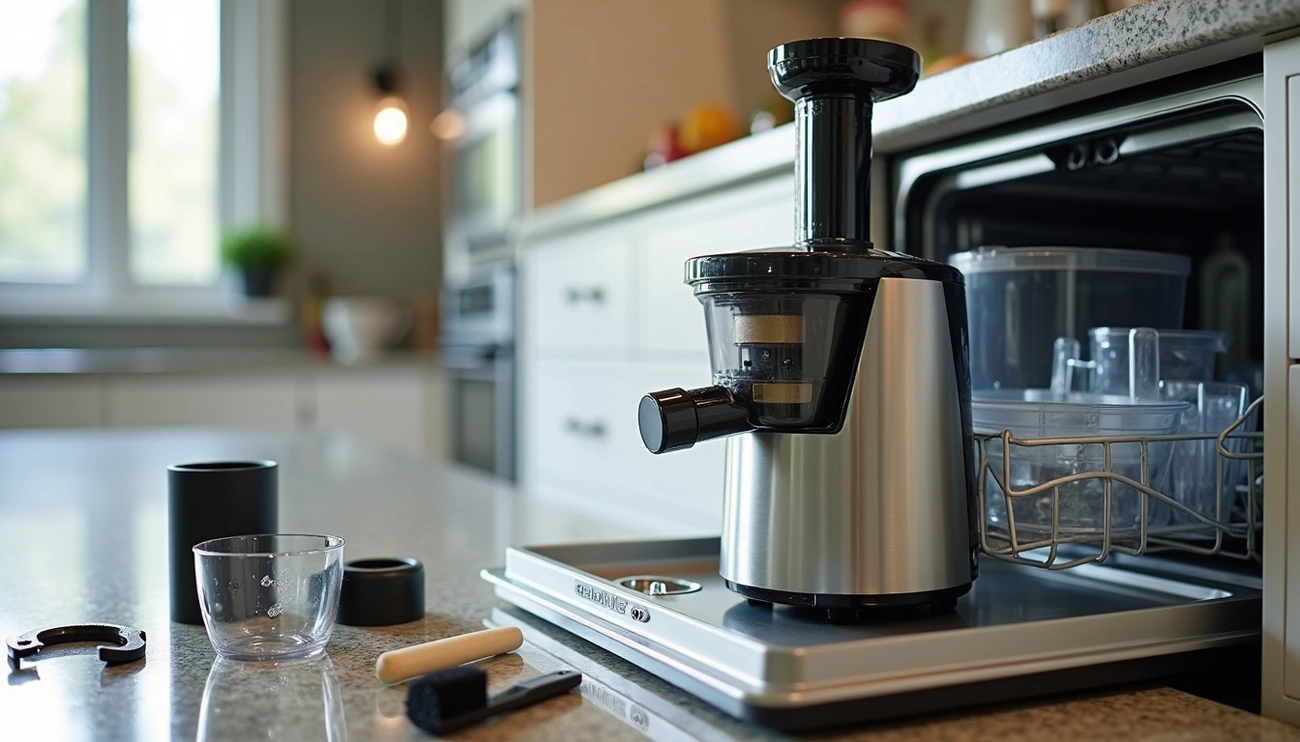
For optimal performance, clean your juicer immediately after each use. Rinse removable parts under warm water, then wash in soapy water. For stubborn buildup, soak the filter basket in hot water with 10% lemon juice for 10 minutes. Scrub the basket with the provided brush in a circular motion to clear away pulp from both inside and outside. Alternatively, soak parts in Oxy Clean solution for tough residue.
Conclusion
Dealing with a non-responsive Breville juicer can certainly feel frustrating, especially when you’re craving fresh juice. Fortunately, as we’ve seen throughout this guide, most issues have straightforward solutions that don’t require technical expertise or expensive repairs.
First, always check the basics – proper plugging, outlet functionality, and cord condition often solve the problem immediately. Safety mechanisms like the locking arm and lid alignment protect both you and your appliance but can sometimes trick you into thinking your juicer is broken when it’s actually working as designed.
For persistent issues, internal components like fuses or breaker contacts might need attention. Though these fixes require a bit more work, they’re still manageable for most homeowners without professional help.