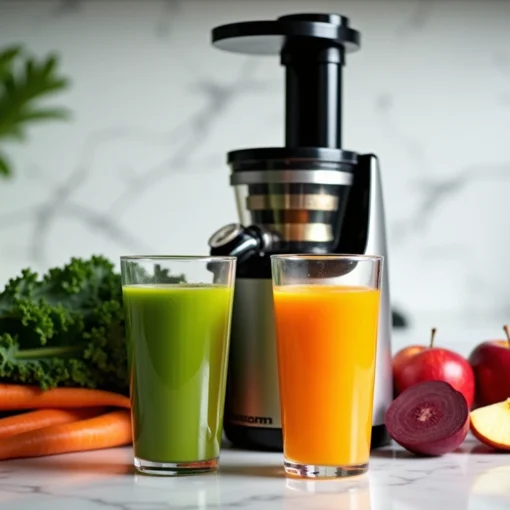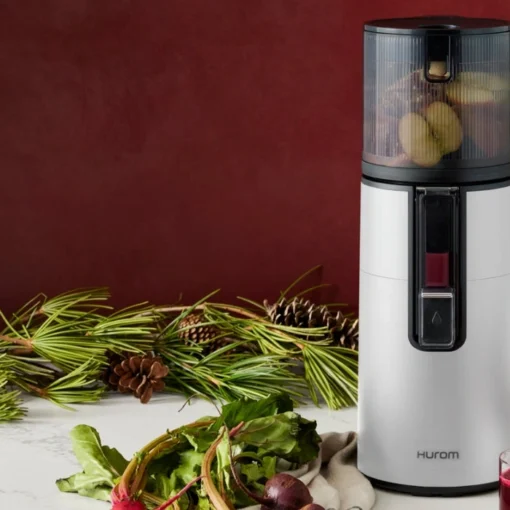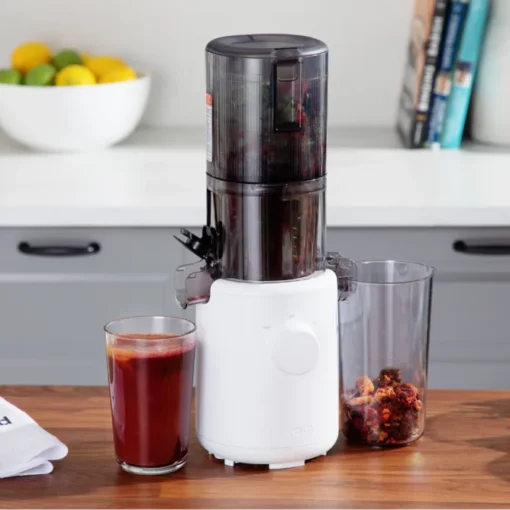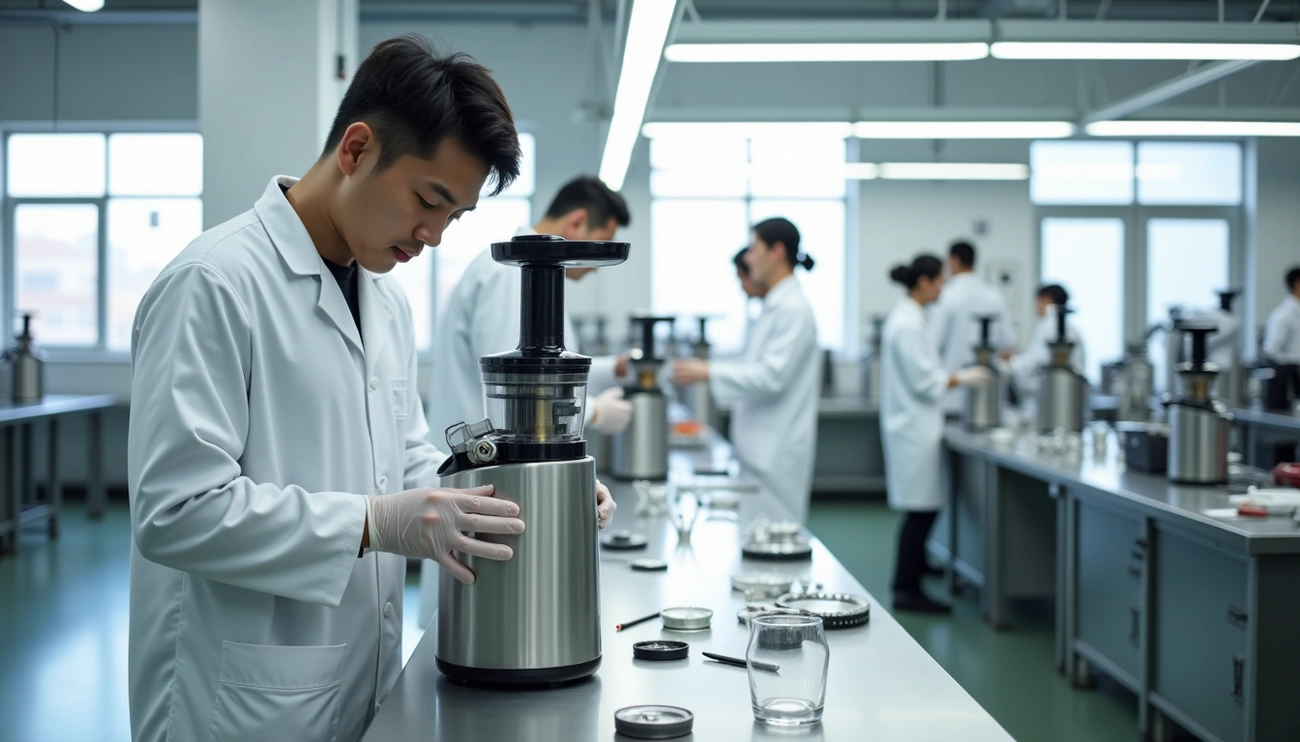
Hurom juicers are made in South Korea. The company operates its own manufacturing facilities there and has over 50 years of experience producing kitchen appliances. Hurom designs and assembles its slow-press juicers in South Korea, where it maintains strict quality control standards.
The Origins of Hurom: From DongAh to Global Brand
The story of Hurom begins in 1974, not with juicers but with a vision. Originally founded as Kaesung Industrial Co. Ltd., the company started with a clear mission – to improve health through innovative kitchen appliances. Throughout the late 1970s and 1980s, the company underwent several transformations, changing its name to Panjung Precision Co. Ltd in 1979.
DongAh Ind Co. and the first juicer patents
The true juicing revolution began in 1993 when the company secured its first invention patent for an “Electric Vegetable Squeezing Device”. By 1996, the company had evolved into DongAh Industry Co. Ltd., setting the stage for what would become a global juicing phenomenon.
The company’s first major juicer product, dubbed “OSCAR,” launched in 1998. This represented their initial foray into the electric juicer market that would eventually lead to their signature slow juicing technology.
Transition from OEM to Hurom branding
The most significant breakthrough came in 2005 with the development of Slow Squeezing Technology (SST). This proprietary method fundamentally changed how juice is extracted, preserving more nutrients and enhancing flavor profiles compared to traditional high-speed juicers.
Subsequently, in 2008, the company created their first slow straining device under the “HUROM” name. This marked the beginning of the brand identity we recognize today. By 2011, the company officially changed its name to HUROM Co., Ltd., signaling its complete transformation from components manufacturer to global juicer brand.
The birth of Hurom USA
During this period of growth, Hurom expanded globally at a remarkable pace. The company first established international operations with a Chinese branch in 2000, followed by a Japanese branch in 2011. Furthermore, they completed construction of a dedicated Research and Development Center that same year, cementing their commitment to innovation.
Hurom’s growth continued at a steady pace, and by 2023, the company had achieved an impressive $2.1 billion in sales with cumulative unit sales reaching 12 million globally. Meanwhile, Hurom expanded its presence across international markets while maintaining its manufacturing base in South Korea.
For consumers wondering which Hurom juicer to buy, understanding this rich heritage provides valuable context about where Hurom juicers are manufactured and the decades of engineering expertise behind each model.
Inside the Hurom Factory: Where the Juicers Are Made
Beyond the history and branding, understanding where Hurom juicers are manufactured gives insight into their exceptional quality. The manufacturing story reveals why these appliances command premium prices and loyal followings worldwide.
Where is Hurom made: South Korea’s role
Hurom’s headquarters and manufacturing facilities are firmly rooted in South Korea. This isn’t merely a geographical detail—it represents the company’s commitment to maintaining direct control over production standards. Unlike many competitors who outsource manufacturing, Hurom operates a substantial production facility spanning between 10,000 to 250,000 square meters in its home country. Notably, the company employs over 1,000 people across its operations.
Factory conditions and employee wellness
I was particularly impressed by Hurom’s approach to workplace conditions. The company treats employees “like family” by providing above-average wages and benefits. Their state-of-the-art factories prioritize clean, safe environments designed to minimize accident risks. Furthermore, the company conducts regular testing to ensure products are free from hazardous materials that could harm employees, customers, or the environment.
Perhaps most telling of their commitment to employee wellness is the retreat center built in the mountains of Sancheong, about 90 minutes from Busan. This facility allows employees to enjoy fresh air and relaxation throughout the year. Consequently, visitors to the factory consistently report happy, friendly workers.
Hand-assembled parts and quality control
The manufacturing process itself stands apart in today’s automated world. Each Hurom juicer component receives individual attention as all parts are assembled and inspected by hand. This meticulous approach ensures exceptional quality control throughout production. The immaculate factory conditions feature educational materials about healthy lifestyles and juicing benefits displayed on walls.
For those wondering which Hurom juicer to buy, understanding this craftsmanship helps explain their reputation. This hands-on manufacturing process undoubtedly contributes to the brand’s annual output exceeding $100 million and its steadily growing global presence.
Innovation and Technology Behind Hurom Juicers
The driving force behind Hurom’s success isn’t just about where Hurom juicers are made, but the revolutionary technology powering them. First and foremost, Hurom invented their signature Slow Squeeze Technology in 2003, fundamentally changing how juicers extract nutrients from produce.
Lab testing for nutrient extraction
Under microscopic examination, juice produced by Hurom’s technology reveals intact cellular structures that maintain natural color and nutritional integrity. This stands in stark contrast to centrifugal juicers, which heat up and oxidize juice, breaking down nutrients and altering color. The proof is in the pulp—Hurom’s system produces noticeably drier waste material, indicating superior extraction.
Moreover, Hurom’s comprehensive lab testing ensures maximum nutrient preservation. The slow-squeezing process mimics hand-squeezing fruit, operating at low speeds to minimize heat and oxidation that typically destroy sensitive nutrients.
Evolution from horizontal to vertical augers
A true breakthrough occurred in 2005 when Hurom developed the world’s first vertical screw juicer. Prior to this innovation, the company had focused on horizontal single-auger juicers, securing seven patents between 1992-1998.
The transition to vertical design represented a significant advancement that revolutionized the industry. In 2009, this vertical slow juicer was officially introduced to the market, marking a pivotal shift away from traditional centrifugal models toward more efficient nutrient preservation.
Patents and proprietary designs
Hurom’s core technology components include:
- A low-speed auger made from durable polyetherimide (PEI)
- A fine strainer with 0.3mm mesh grid
- A spinning brush that continuously mixes juice for uniform texture
Hurom vigorously defends these innovations, recently winning significant patent infringement cases in Europe, South Korea, and the United States. For instance, NUC (maker of Kuvings juicers) was banned from selling products in Europe with a €2,000 fine per infringing unit sold.
For consumers wondering which Hurom juicer to buy, understanding these technological distinctions helps explain why the company maintains manufacturing excellence in South Korea rather than outsourcing production.
Hurom’s Global Reach and Brand Partnerships
From a small South Korean manufacturer to a global juicing powerhouse, Hurom has expanded its footprint across continents. Despite maintaining manufacturing operations in South Korea, the company has successfully tailored its products for different markets worldwide.
Which Hurom juicer to buy: global models
When deciding which Hurom juicer to buy, it’s helpful to understand regional variations. Though all models feature the same core Slow Squeeze Technology, specific features vary by market. Japanese models typically emphasize compact designs for smaller kitchens, whereas European versions often include additional safety features to meet EU regulations.
Hurom vs. Omega and other OEM relationships
Interestingly, Hurom produces juicers for several competing brands. Indeed, many Omega horizontal juicers are manufactured by Hurom but marketed under the Omega label. Similarly, Hurom has established OEM partnerships with numerous kitchen appliance companies across Asia and North America, though they maintain stricter quality standards for their namesake products.
Distribution in over 50 countries
From their manufacturing base in South Korea, Hurom juicers now reach customers in more than 50 countries. Specifically, they’ve established dedicated offices in China, Japan, and the United States to better serve these major markets. Nevertheless, regardless of where you purchase a Hurom juicer, you’re getting a product made in the same South Korean facilities with identical quality standards.
Conclusion
Throughout this exploration of Hurom’s manufacturing journey, we’ve discovered the remarkable story behind these premium juicers. From humble beginnings in South Korea to global recognition, Hurom has maintained its commitment to exceptional quality and innovation. After all, their decision to keep production in South Korea rather than outsourcing speaks volumes about their dedication to craftsmanship.
The meticulous hand-assembly process certainly explains why Hurom juicers command higher prices than mass-produced alternatives. Each unit undergoes careful inspection by skilled workers who benefit from the company’s family-like approach to employee wellness. This attention to detail undoubtedly contributes to the longevity and performance that Hurom users praise worldwide.
Technological innovation remains at the heart of Hurom’s success. Their pioneering Slow Squeeze Technology fundamentally changed juice extraction, while the shift from horizontal to vertical augers revolutionized the entire industry. Consequently, these advancements have made Hurom a target for imitators – a challenge they’ve successfully defended against through vigorous patent protection.