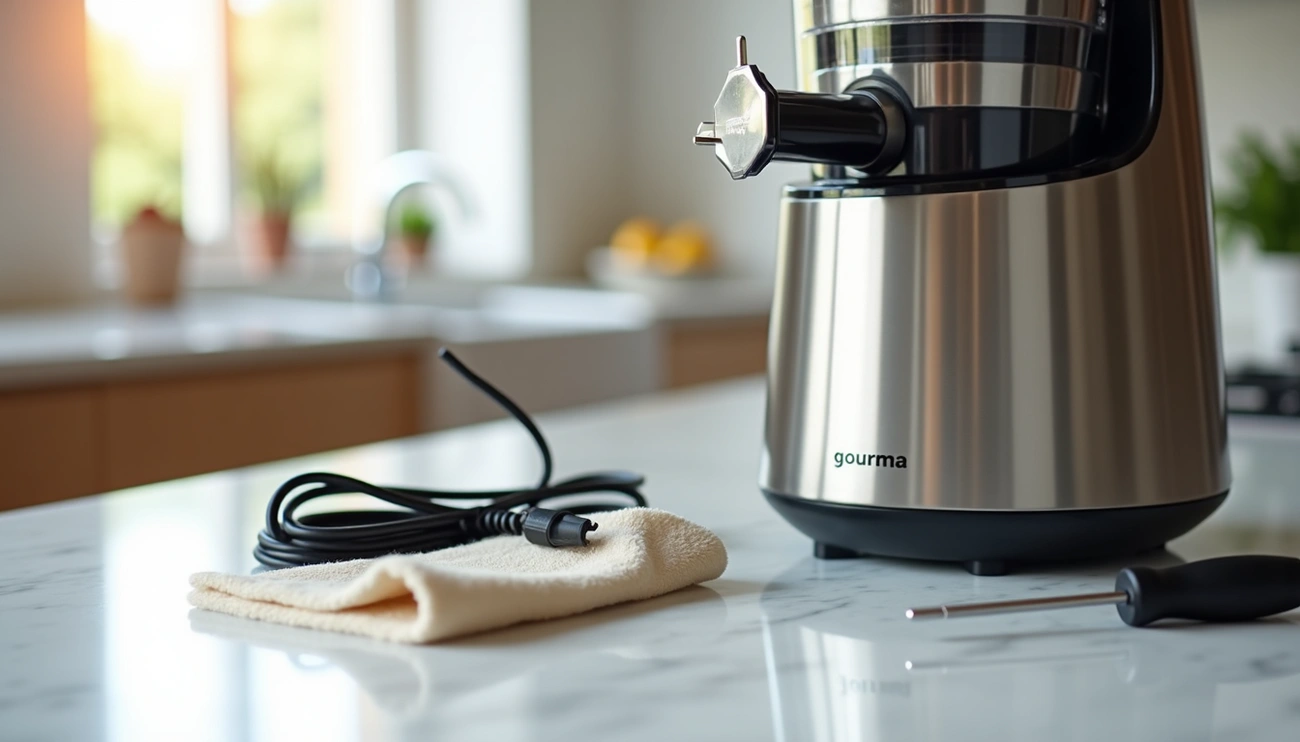
A Gourmia juicer does not turn on when the safety lock system detects improper assembly. The motor will not run unless the safety locking arm clicks fully into place, the lid secures tightly, and the pulp container aligns correctly. Overheating can also trigger a thermal fuse. Allow a 10–15 minute cool-down before restarting.
Check the Basics First
When your Gourmia juicer refuses to turn on, a systematic approach to troubleshooting will save you time and frustration. Starting with basic checks often solves the problem without requiring technical knowledge or special tools.
Is the power cord plugged in properly?
Initially, this might seem obvious, but a loose connection is frequently the culprit behind a non-functioning juicer. Ensure the power cord is firmly seated in both the wall outlet and the juicer base. Examine the entire length of the cord for any visible damage such as fraying, cuts, or exposed wires. If you notice any damage to the cord, contact a qualified electrician or service provider immediately rather than attempting repairs yourself. Remember that electrical safety should always be your priority when dealing with kitchen appliances.
Try a different outlet or power source
If the cord appears intact and properly connected, the issue might be with your power source rather than the juicer itself. Unplug your Gourmia juicer and connect it to a different outlet in another area of your home. This simple step can rule out problems with tripped circuit breakers or faulty outlets. Many kitchen outlets are connected to the same circuit, so moving to a completely different room offers a better test. For thorough testing, try plugging a different appliance into the original outlet to confirm whether it’s providing power.
Check if the power switch is responsive
Surprisingly, a juicer that won’t turn on often has issues with the power switch rather than a failed motor. Press the power button firmly and listen for any clicking sound. If the switch feels stuck or doesn’t produce the usual tactile feedback, it might be jammed. For many juicer models, a sticky switch can be fixed by opening the housing to free the mechanism, then cleaning and lubricating it. This simple repair usually takes only minutes and can save your juicer from being discarded.
After completing these basic checks, verify whether the motor starts and stops properly when using the switch. If these steps don’t resolve your gourmia juicer not turning on, you’ll need to move on to more advanced troubleshooting methods.
Inspect the Safety Lock Mechanism
Safety mechanisms are a fundamental feature of many modern appliances, including your Gourmia juicer. If your unit refuses to power on after checking the basic electrical connections, the problem often lies with the safety lock system.
How the safety lock prevents operation
Gourmia juicers incorporate an essential safety feature that prevents the motor from running if components aren’t properly secured. This design specifically protects users from potential injuries that might occur if the juicer operated with improperly attached parts. The safety lock works through a series of connection points that must align perfectly—creating a complete circuit that allows power to flow to the motor. In fact, this failsafe mechanism is one of the most common reasons a Gourmia juicer won’t turn on, even when plugged into a functioning outlet.
Ensure all parts are aligned and locked
For your Gourmia juicer to operate correctly, each component must be positioned precisely according to the manufacturer’s specifications. Start by confirming that the centrifugal bowl is seated properly. Next, verify that the pusher aligns correctly with the feeding chute—the groove on the pusher must line up with the tab on the chute before pushing down. Furthermore, inspect all components to ensure nothing is cracked or damaged, as even minor defects can trigger the safety mechanism.
Common mistakes during assembly
A primary error users make is attempting to assemble the juicer while it’s still plugged in, which Gourmia explicitly warns against. Additionally, improper handling of the centrifugal bowl is dangerous because the blades are exceptionally sharp. Another oversight involves failing to clean components thoroughly after each use—residue can prevent parts from sitting flush against each other, triggering the safety mechanism. Some users mistakenly believe the juicer is malfunctioning when, in reality, they haven’t aligned the components correctly during reassembly after cleaning.
By methodically checking these safety lock mechanisms, you’ll likely identify why your Gourmia juicer isn’t turning on and resolve the issue without needing professional assistance.
Look for Internal or Electrical Issues
After checking the safety mechanisms, it’s time to examine potential electrical problems inside your Gourmia juicer. Internal issues often require more careful inspection yet can frequently explain why your appliance refuses to power up.
Check for blown fuse or tripped breaker
Even with your juicer properly plugged in, electrical problems might exist elsewhere in your home. Verify whether other appliances on the same circuit are functioning correctly. Consequently, check your home’s circuit breaker panel for any tripped breakers—reset them if necessary. Some Gourmia models contain internal fuses designed to protect the motor from electrical surges. Locate your juicer’s user manual to identify if yours has an accessible fuse that needs replacement.
Signs of a faulty motor or wiring
Motor problems typically announce themselves through distinctive warning signals before complete failure. Be alert for these indicators:
- Unusual noises during operation or attempted startup
- Burning smell or excessive heat coming from the base
- Motor that spins slowly or struggles to process ingredients
- Intermittent operation—the juicer works sometimes but not consistently
- Sudden shutdowns while juicing, especially with tough produce
The motor might be overheating if your juicer shuts off unexpectedly mid-operation. This happens because internal protection mechanisms activate to prevent permanent damage. Moreover, if you notice excessive vibrations or the motor makes effort to turn but fails to start, these symptoms indicate potential electrical issues or worn components.
When to consider professional repair
Once you’ve exhausted basic troubleshooting steps without success, professional assistance becomes necessary. Particularly concerning signs that warrant expert attention include visible damage to internal wiring, persistent burning smells, or motors that make grinding noises. Unless you have specific electrical repair experience, attempting to fix motor issues yourself can lead to further damage or safety hazards.
Compare repair costs against replacement—afterward, make an informed decision based on your juicer’s age and condition. For juicers still under warranty, contact Gourmia’s customer support directly as they may cover repair costs or provide replacement options. Qualified repair technicians can often diagnose problems quickly and recommend the most cost-effective solution.
Prevent Future Power Issues
Proper maintenance plays a vital role in extending your juicer’s lifespan and preventing future power issues. Regular cleaning and correct storage ensure your appliance continues to function properly for years to come.
How to clean Gourmia juicer safely
First, always unplug your juicer and allow it to cool completely prior to cleaning. Never immerse the base unit in water or any liquid. Instead, wipe the base gently with a soft, damp cloth and mild detergent to remove stains. For other components, use warm soapy water. Throughout this process, exercise extreme caution when handling the centrifugal bowl as the blades are exceptionally sharp.
Avoiding dishwasher damage to parts
While some Gourmia models feature dishwasher-safe components like the pitcher, pulp container, and brush, the high heat from dishwashers can damage critical parts—particularly those containing safety sensors. The juicer base must never be placed in the dishwasher. As an alternative, many Gourmia juicers include a self-cleaning cycle. To use it, place the brush onto the bottom of the chute by aligning the groove with the tab.
Proper storage and handling tips
Once thoroughly cleaned, ensure all parts are completely dry before storage. Store your juicer in a clean, dry, well-ventilated area away from moisture. Additionally, always place the base on a smooth, stable surface when in use. For extended periods without use, store the appliance with all components properly assembled to prevent damage to individual parts.
Conclusion
Dealing with a Gourmia juicer that won’t turn on can certainly be frustrating, but most issues have straightforward solutions. After examining all possible causes, you’ll likely find the problem stems from one of the key areas we’ve discussed. Power connection problems often represent the simplest fix – checking cords, outlets, and switches before moving to more complex troubleshooting.
Safety mechanisms, though occasionally annoying when they prevent operation, ultimately protect both you and your appliance. Proper alignment of all components remains essential for your juicer to function correctly. Additionally, internal electrical issues might require more careful inspection but can frequently explain persistent power problems.
Regular maintenance stands as your best defense against future issues. Careful cleaning after each use, proper storage, and gentle handling will significantly extend your juicer’s lifespan. Remember that dishwashers can damage critical components despite some parts being labeled dishwasher-safe.