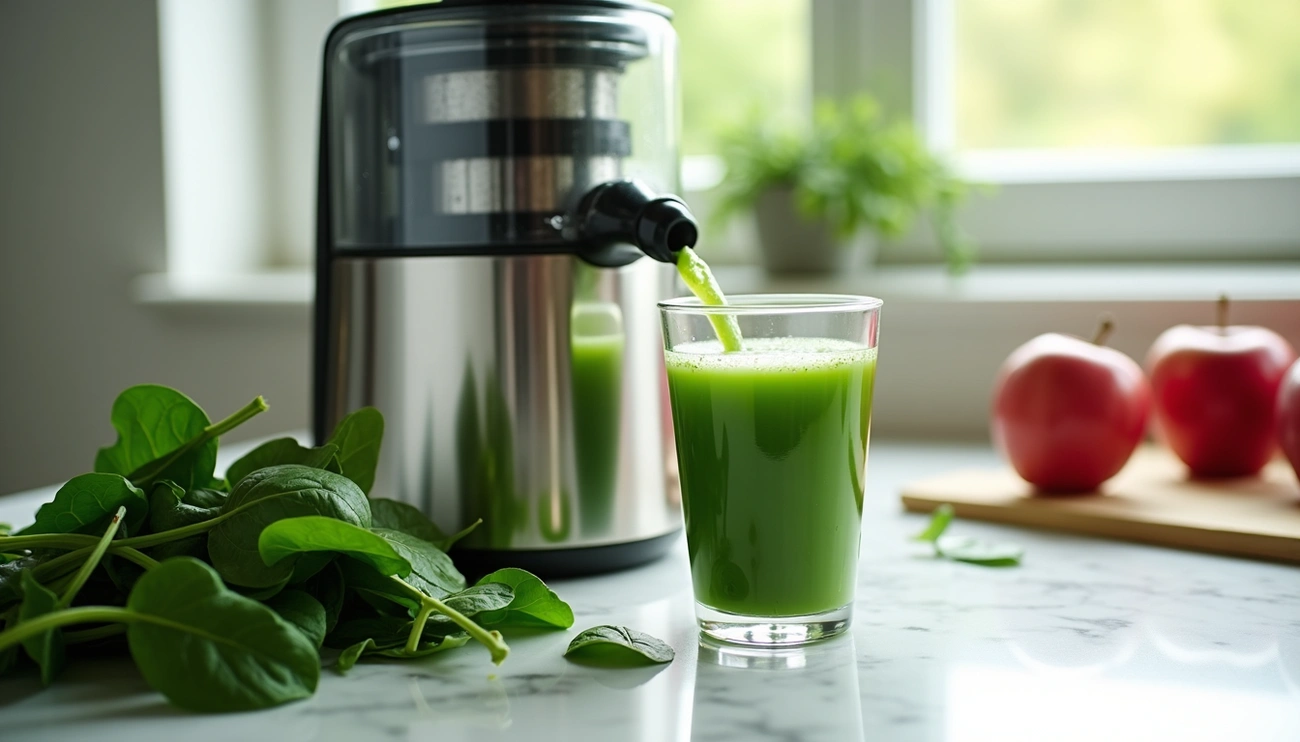
Yes, you can put spinach in a juicer. Spinach juices well and delivers vitamins A, C, and K. Wash leaves thoroughly and bunch or fold them before juicing. Pair spinach with firm produce like apples or cucumbers to improve extraction, especially in centrifugal juicers. Masticating juicers handle leafy greens more efficiently.
Can you put spinach in a juicer?
Yes, you absolutely can put spinach in a juicer! This versatile leafy green processes beautifully through both centrifugal and masticating juicers, making it a fantastic addition to your juicing repertoire.
Why spinach is a popular juicing green
Spinach has earned its place as a top choice for juicing enthusiasts for several compelling reasons. First, it’s readily available year-round and budget-friendly, making it accessible for regular juicing. Furthermore, spinach offers a remarkably mild flavor profile that blends seamlessly with other ingredients. Unlike some greens that can overpower a juice with bitterness, spinach contributes nutrients without dominating the taste.
Many people choose spinach because it’s a nutritional powerhouse. Just one cup (240 mL) of spinach juice provides nearly 63% of your daily vitamin A needs and about 38% of your required vitamin C. The nutritional density makes it an efficient way to boost your nutrient intake through a small serving of juice.
Juicing vs blending spinach
The debate between juicing and blending spinach centers primarily around fiber content. When you ask “can you juice spinach in a juicer,” remember that juicing removes most insoluble fiber while retaining soluble fiber and concentrating nutrients. Consequently, your body absorbs these nutrients more rapidly.
Blending, on the other hand, keeps all the fiber intact, creating a thicker texture that promotes fullness and helps regulate blood sugar levels. One major benefit of blended spinach is that the fiber slows digestion, providing sustained energy throughout the day.
For those concerned about nutrient loss, both methods have merit. Juicing offers concentrated nutrients for quick absorption, especially beneficial during recovery or for those with digestive sensitivities. Meanwhile, blending preserves the complete nutritional profile, including important fiber-bound compounds.
Common misconceptions
Despite its popularity, several myths surround spinach juicing. One prevalent misconception concerns blood-thinning medication interactions. Though excessive consumption of spinach can affect anti-clotting medication, moderate amounts are generally safe provided your intake remains consistent.
Another misconception is that spinach juice tastes unpleasant. Although plain spinach juice might seem boring due to its low sugar content, pairing it with apple, cucumber, lemon, or ginger creates a refreshingly tasty combination.
Some believe specialized equipment is required, but how to juice spinach successfully depends more on technique than equipment type. Both standard centrifugal juicers and cold press models can effectively extract spinach juice.
How to juice spinach effectively
First of all, getting the most from your spinach requires the right equipment and technique. Let’s explore how to maximize your spinach juicing results.
Choosing the right juicer
Masticating juicers (also called cold press or slow juicers) are ideal for spinach. These operate at lower speeds than centrifugal models, preserving delicate enzymes and nutrients while minimizing heat and oxidation. Cold press juicers crush and press spinach with an auger, extracting juice effectively from leafy greens.
For tough greens like spinach, look for:
- Wider feed chutes (about 5 inches) to minimize prep work
- Juicers with reverse functions to prevent clogging
- Multiple speed settings for dealing with fibrous leaves
Centrifugal juicers work faster but may produce warmer juice with more oxidation. According to testing, the Breville Juice Fountain Compact can produce carrot juice at a low 54°F, while some masticating models produce juice as warm as 78°F.
How to prep spinach for juicing
Proper preparation ensures maximum juice yield from spinach leaves:
- Select fresh, vibrant spinach leaves (organic if possible to minimize pesticide exposure)
- Rinse thoroughly under cold water to remove dirt
- Remove any large, tough stems that might clog your juicer
- Try rolling leaves into tight “cigars” before juicing – this technique helps the juicer process them more effectively
Moreover, soaking tough leaves in water for 5-10 minutes before juicing can dramatically increase juice yield, as water absorption softens cell walls.
Juicing spinach alone vs in blends
Spinach juice on its own can be challenging for beginners, given its earthy flavor profile. In essence, spinach pairs wonderfully with:
- Apples (creating a far more pleasurable and drinkable experience)
- Cucumber (for a refreshing green juice)
- Lemon (which also helps break down spinach’s tough cell walls)
Adding at least 1/2 lemon wedge per cup of spinach not only enhances flavor but improves extraction efficiency. For balanced sweetness without blood sugar spikes, aim for an 80/20 or 90/10 ratio of vegetables to fruits.
Equally important, variety prevents oxalic acid buildup. As a result, rotating different greens (kale, chard, collards) in your juices each week is recommended.
Nutritional benefits of spinach juice
Delving into the nutritional profile of spinach juice reveals why this green elixir has gained popularity among health enthusiasts. When you examine what happens after you put spinach in a juicer, you’ll discover a concentrated source of essential nutrients.
Vitamins and minerals in spinach
Spinach juice delivers an impressive array of nutrients. Just one cup (240 mL) provides nearly 63% of your daily vitamin A requirements and approximately 38% of vitamin C. It’s also remarkably rich in vitamin K, containing about 483 μg per 100 grams – that’s 460% of daily recommendations. Beyond vitamins, spinach juice offers iron, calcium, magnesium, and potassium, with about 14% of your potassium needs per serving.
How juicing affects nutrient absorption
Juicing spinach primarily increases bioavailability by breaking down plant cell walls. Interestingly, research indicates that chopping spinach before juicing releases the greatest amount of lutein, a powerful antioxidant. For optimal nutrient retention, avoid heating spinach juice. Even better, adding dairy fats like yogurt or cream enhances lutein absorption.
Spinach juice for skin, hair, and immunity
For skin benefits, spinach’s vitamin C supports collagen production, promoting elasticity and wound healing. The vitamin A content helps regulate skin cell generation. Regarding hair health, spinach’s iron improves oxygen delivery to follicles, whereas its folate supports cell division for hair growth. Finally, spinach juice strengthens immunity through its vitamin C content, alongside other infection-fighting compounds.
Things to watch out for
While you can put spinach in a juicer for nutritional benefits, there are several important considerations to keep in mind.
Oxalates and kidney health
Spinach contains high levels of oxalates, natural compounds that can bind with calcium in your body. Therefore, excessive consumption may lead to kidney stones in susceptible individuals. These oxalates can crystallize in the kidneys, forming calcium oxalate stones – one of the most common types of kidney stones. In extreme cases, high oxalate consumption from juicing has even caused acute oxalate nephropathy resulting in kidney failure.
How much spinach juice is too much?
For most people, it’s recommended to limit intake to about 1 cup (240 ml) of spinach juice per day. Nevertheless, even this amount might be excessive for some individuals. One glass of spinach juice contains approximately eight to ten times the oxalate compounds your body can handle. Hence, moderation is crucial when juicing spinach.
When to avoid spinach juice
In particular, these groups should exercise caution with spinach juice:
- People with history of kidney stones or kidney disease
- Individuals taking blood-thinning medications like warfarin, as spinach’s high vitamin K content affects how these medications work
- Those with thyroid disorders, since raw spinach contains goitrogens
- Pregnant women and children under 12 months
- People with sensitive digestion who experience bloating after consuming raw greens
For safer consumption, consider blanching spinach before juicing, which can reduce oxalate levels by 30-87%.
Conclusion
Spinach stands out as an excellent candidate for juicing, offering remarkable nutritional benefits while remaining accessible and affordable. Throughout this article, we’ve seen that both centrifugal and masticating juicers can process spinach effectively, though cold press models generally preserve more nutrients and extract juice more efficiently from leafy greens.
Remember that proper preparation makes a significant difference when juicing spinach. Fresh, thoroughly washed leaves rolled into tight bundles yield better results, especially when combined with complementary ingredients like apples, cucumber, or lemon. These additions not only enhance flavor but also improve extraction efficiency.