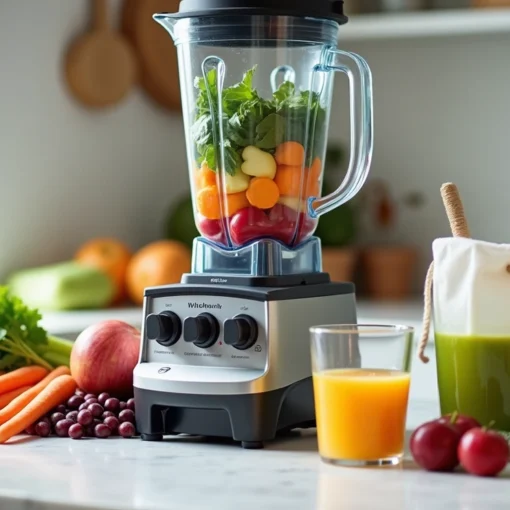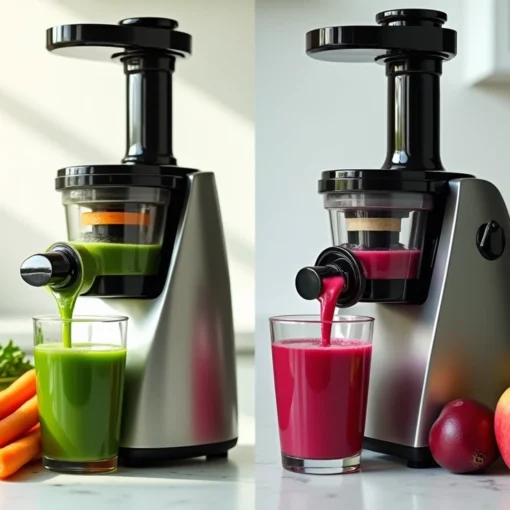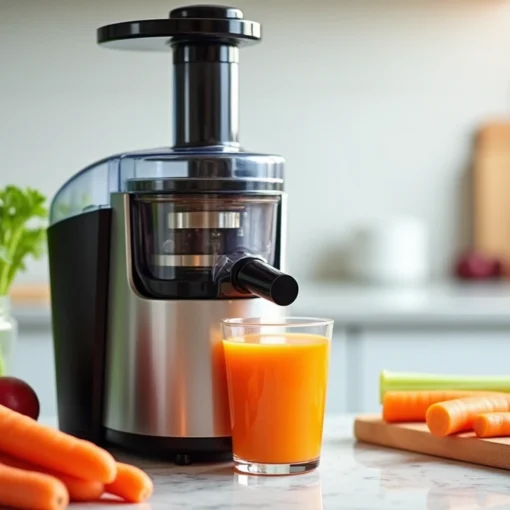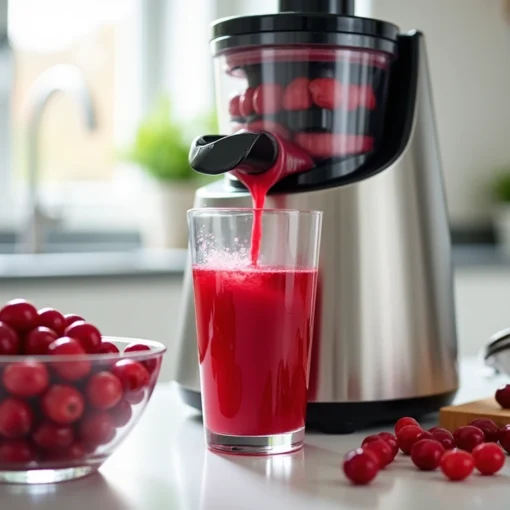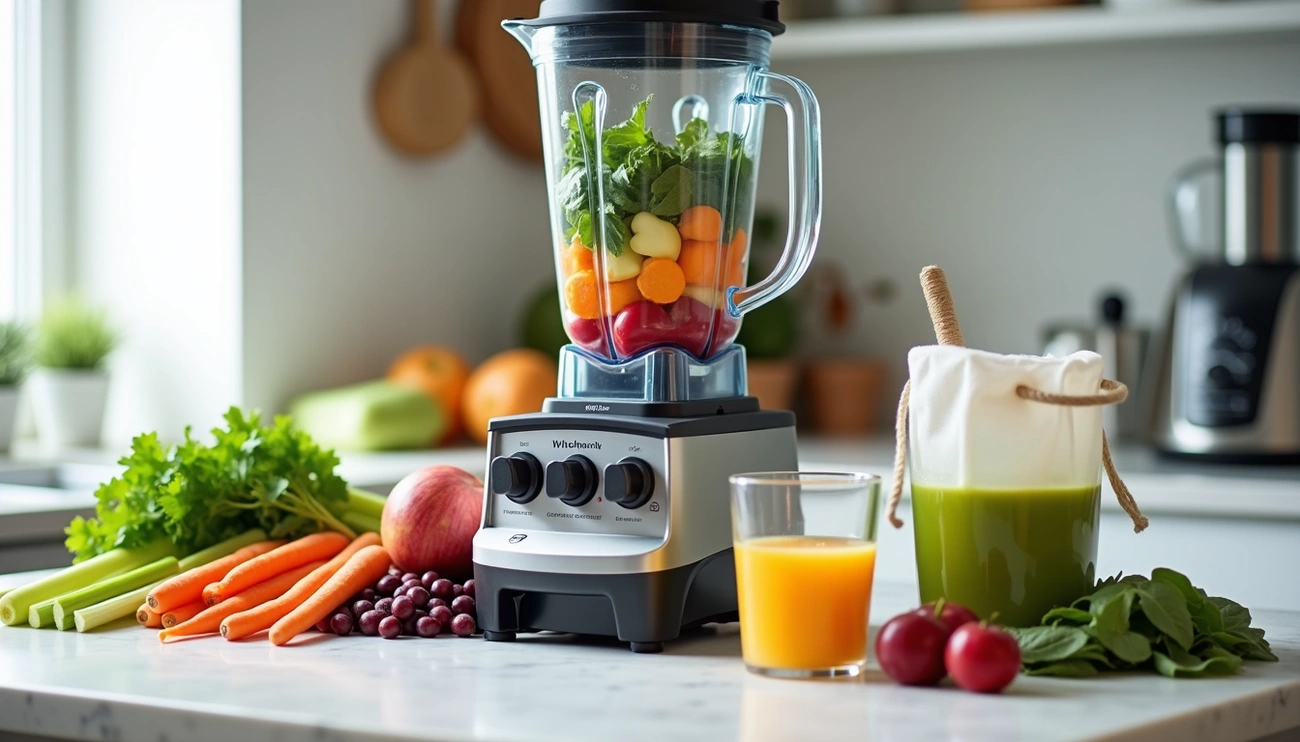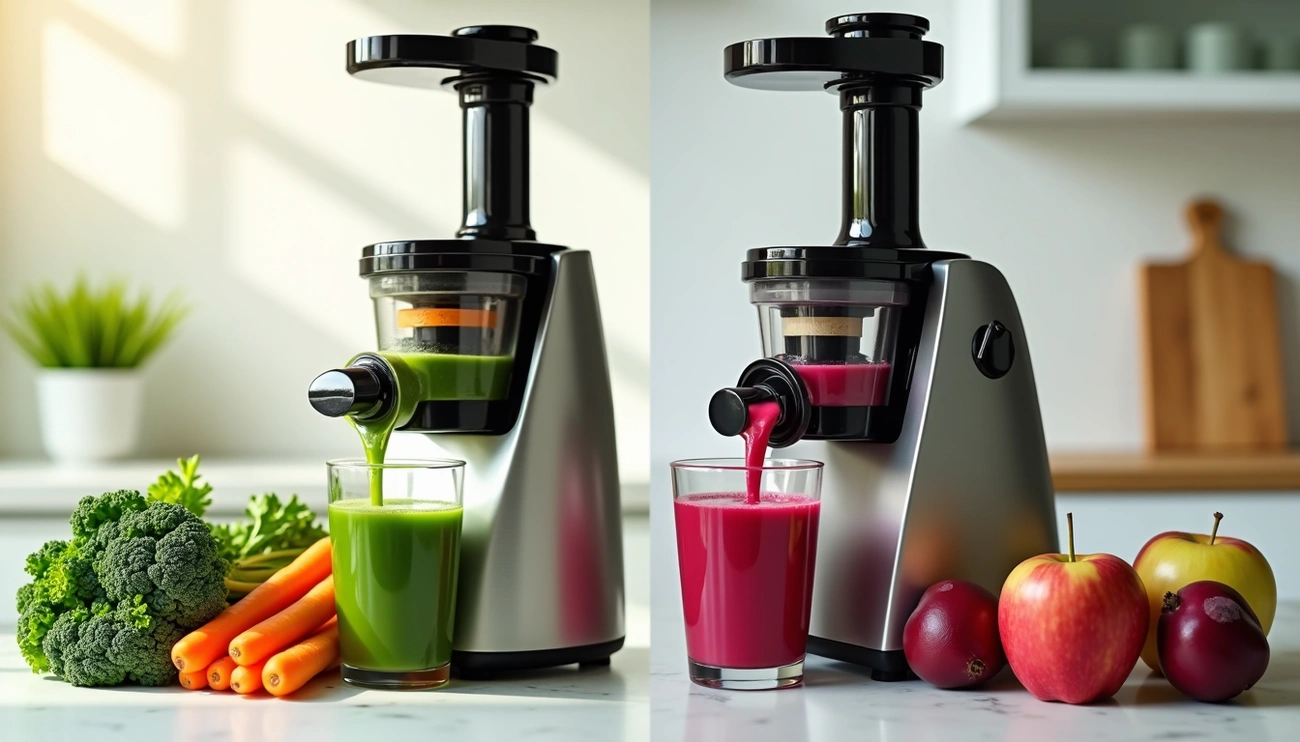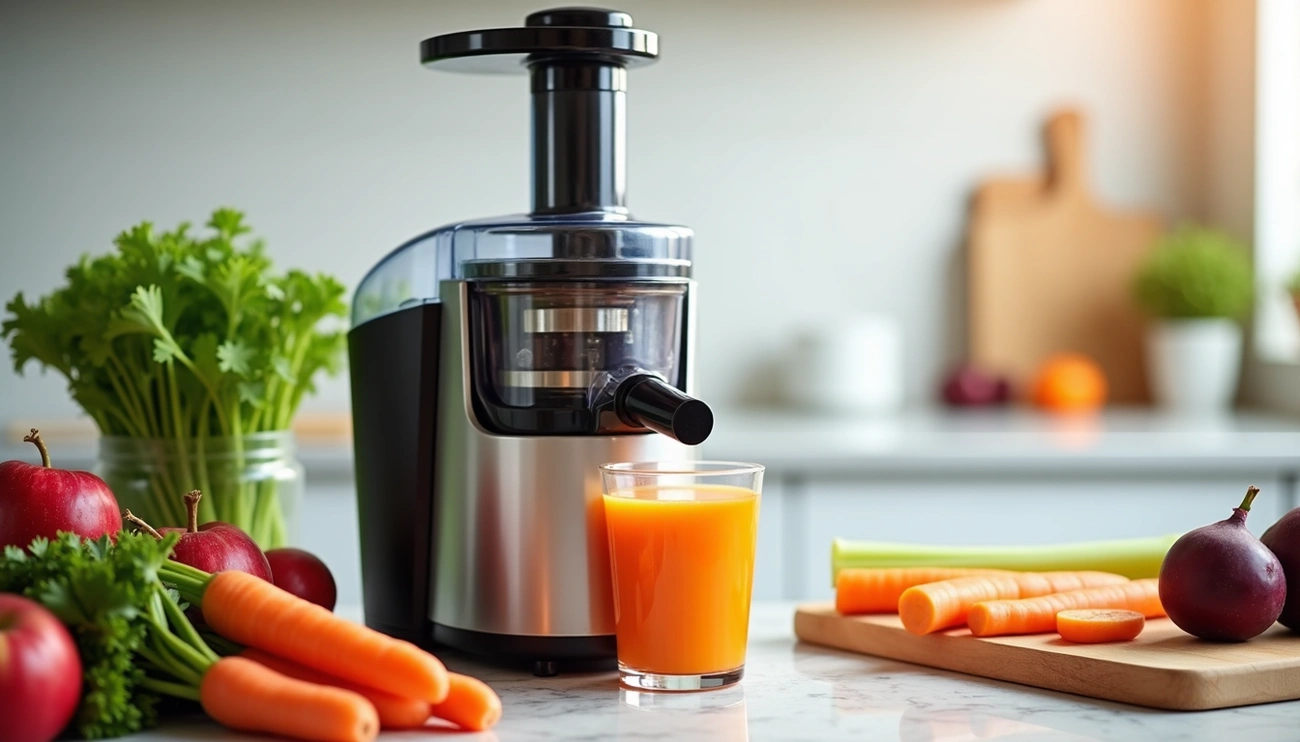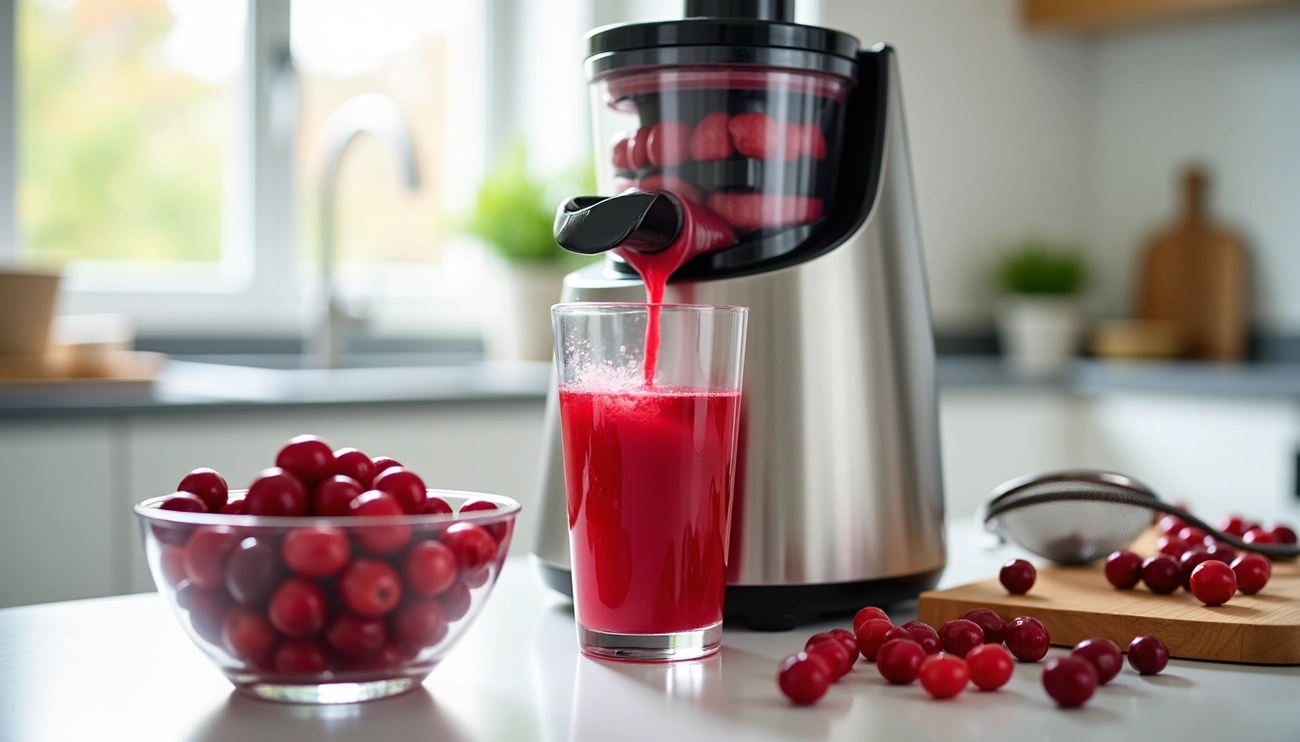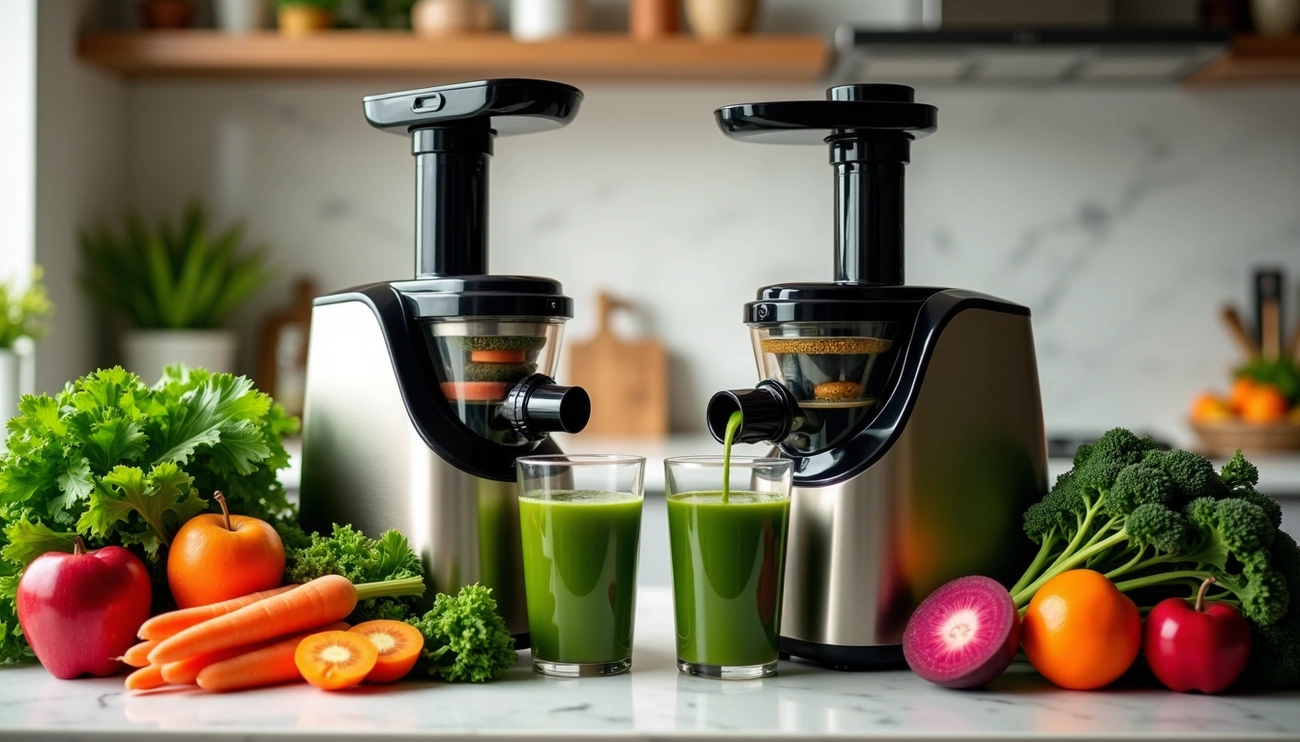
The main difference between cold press juicer vs masticating juicer is terminology and mechanism. Most home cold press juicers are masticating juicers that operate at 80–100 RPM using a slow auger to extract juice without heat. True cold press machines can use hydraulic presses. Both preserve nutrients, handle leafy greens well, and keep juice fresh up to 72 hours when refrigerated.
What is a masticating juicer?
A masticating juicer is a specialized kitchen appliance that extracts juice through a slow grinding and pressing process. The name itself gives a clue to its function—”masticate” literally means “to chew”—as these machines methodically break down fruits and vegetables much like your teeth would.
How it works
Unlike centrifugal juicers that use high-speed spinning blades, masticating juicers employ a completely different mechanism. At the heart of these machines is a rotating auger (sometimes called a drill or screw) that slowly crushes produce against a static screen or chamber. This methodical crushing action breaks down the cell walls of fruits and vegetables, extracting juice while separating it from the pulp.
The process is relatively straightforward: you feed fruits or vegetables into the chute, and the rotating auger grinds the produce into a pulp. Subsequently, this pulp gets pressed against a fine mesh screen, forcing the juice out while the dry pulp exits through a separate outlet. This two-step process of crushing and pressing ensures maximum extraction efficiency.
Notably, the thoroughness of this extraction leaves behind remarkably dry pulp—a telltale sign of effective juicing. Furthermore, the gentle pressing action preserves more of the natural flavor, color, and nutritional content compared to high-speed juicers.
Why it’s called a slow juicer
The “slow” designation comes from the juicer’s operating speed. Masticating juicers typically operate at just 80-100 revolutions per minute (RPM), which stands in dramatic contrast to centrifugal models that spin at an astounding 3,000 to 16,000 RPM. In fact, some premium models run even slower—for instance, the Omega VSJ8443QS operates at merely 46 RPM.
This deliberate slowness is actually one of its greatest strengths. First of all, the reduced speed minimizes heat generation during the juicing process. Excessive heat can destroy delicate enzymes and nutrients in fruits and vegetables, so keeping temperatures low helps preserve these beneficial compounds.
Secondly, the slow speed significantly reduces oxidation—the process that causes nutrients to break down quickly and juice to separate and discolor. As a result, juice from masticating juicers generally has a longer shelf life than that produced by faster juicers.
Finally, masticating juicers operate much more quietly than their high-speed counterparts, making them ideal for morning juicing without disturbing your household.
Common features and use cases
Beyond basic juicing, masticating juicers offer impressive versatility. Many models can function as multi-purpose food processors, capable of making:
- Baby food and purees
- Nut butters (including peanut butter)
- Frozen sorbets and desserts
- Pasta or noodles
These machines excel particularly with leafy greens such as kale, spinach, and wheatgrass—ingredients that typically challenge centrifugal juicers. The slow, methodical grinding action effectively breaks down fibrous cell walls in these greens, extracting significantly more juice.
Efficiency is another standout feature. Masticating juicers typically produce approximately 30 percent more juice than other juicer types, meaning your produce stretches further. This higher yield helps offset the higher initial price point over time.
What is a cold press juicer?
The term “cold press juicer” originated in the 1950s and has since become somewhat misunderstood in today’s juicing landscape. Deciphering what truly constitutes a cold press juicer requires understanding the technology behind these machines and how marketing has blurred the lines between different juicing methods.
Understanding cold press technology
True cold press technology involves a two-step extraction process: first grinding fruits and vegetables into a pulp, then applying pressure to extract the juice. This method was originally called “cold press juicing” because it doesn’t generate significant heat during the extraction process, helping preserve nutrients.
A genuine cold press juicer utilizes hydraulic (or sometimes pneumatic) pressure to squeeze juice from produce. The process begins with chopping fruits and vegetables into small pieces—about the consistency of chunky salsa—followed by slowly extracting juice by applying thousands of pounds of pressure to the pulp. This gentle method keeps the produce entirely stationary during the pressing phase, avoiding forcing it against sharp screens as other juicers do.
The result is remarkably clean juice containing approximately 99% liquid and less than 0.3% pulp. This produces juice with minimal separation, better taste, and significantly longer shelf life than other juicing methods.
Is it really different from masticating?
Here’s where confusion enters the picture: many manufacturers market masticating juicers as “cold press” juicers, even though the technologies differ significantly. The terminology has become muddled primarily because both methods generate minimal heat during extraction.
In reality, masticating juicers use a rotating auger (screw) that pushes produce against a metal screen. Although they operate at slow speeds, they don’t actually contain a pressing mechanism. Conversely, true cold press juicers include a literal pressing stage where hydraulic or pneumatic force extracts juice.
Moreover, some manufacturers focus their marketing on the low-speed aspect of masticating juicers while ignoring the absence of an actual pressing stage in the extraction process. This has led many consumers to believe that masticating and cold press juicers are identical when they’re not.
Hydraulic press vs auger-based juicers
The key distinction between true hydraulic press juicers and auger-based masticating juicers becomes evident in the juice quality and extraction method.
Hydraulic press juicers represent the most sophisticated juicing technology. These machines apply immense pressure to ingredients after they’ve been shredded into a pulp and placed in permeable bags. The hydraulic system slowly raises everything until it meets resistance, causing juices to flow into a collection bowl. This produces unoxidized fresh juice with minimal foam.
In contrast, masticating juicers use a slow-turning auger that pushes produce against a screen. Although both are considered “cold” methods because they generate minimal heat, the extraction mechanics differ fundamentally.
The differences become apparent in the final product. Juice from a true cold press juicer contains much less pulp, foam, and separation than what’s produced by a masticating juicer. Additionally, juice from an authentic cold press juicer will stay fresh many days longer in refrigeration compared to masticating-produced juice.
Masticating vs cold press juicer: Are they the same?
If you’ve been researching juicers, you’ve likely encountered both terms and wondered about the cold press juicer vs masticating juicer distinction. Indeed, this confusion is one of the most common stumbling blocks for consumers in the juicing community.
Terminology confusion explained
First and foremost, the confusion stems from inconsistent marketing terminology across manufacturers. Many companies use these terms interchangeably on packaging and in advertisements, blurring the lines between distinct technologies. This inconsistency creates a muddy marketplace where consumers struggle to understand what they’re actually purchasing.
The juicing industry has primarily contributed to this confusion by loosely applying the term “cold press” to various slow juicing methods. Originally, “cold press” referred specifically to hydraulic press juicers that used thousands of pounds of pressure in a two-stage process. Yet today, many auger-based masticating juicers are marketed under the cold press label simply because they operate at low speeds that generate minimal heat.
When they are used interchangeably
In most retail contexts, these terms genuinely refer to the same type of juicer. As stated by several manufacturers, “Masticating, slow and cold press juicers are all the same type of juicer”. This equivalence is based on their shared characteristic of minimizing heat and oxidation during extraction to better preserve enzymes and nutrients.
Everyday consumers typically encounter this interchangeable usage when:
- Shopping for home juicers in retail stores
- Reading product descriptions online
- Following juice recipes that specify equipment types
Consequently, for most home juicing purposes, you can consider these terms synonymous.
When they are not the same
Despite common interchangeable usage, technical distinctions exist between true cold press and standard masticating juicers. Namely, authentic cold press juicers employ a hydraulic or pneumatic press mechanism rather than just an auger system.
A legitimate cold press juicer involves two distinct stages: first chopping produce into small pieces, then applying thousands of pounds of pressure to extract juice. This differs from typical masticating juicers that use an auger to crush produce against a screen.
The resulting juice quality can vary between methods. True hydraulic cold press juicers typically produce smoother juice with approximately 99% liquid and less than 0.3% pulp. In contrast, standard masticating juicers might create juice with more solids and that separates more quickly.
At times, especially in commercial settings, this distinction becomes crucial. Professional juice businesses often distinguish between auger-based masticating juicers and hydraulic press systems because the latter generally produces juice with longer shelf life and less separation.
Benefits of using a masticating or cold press juicer
Beyond the mechanical distinctions we’ve explored, masticating and cold press juicers offer compelling advantages that explain their popularity among health enthusiasts and juice businesses alike. Let’s examine what makes these juicers a worthwhile investment.
Higher juice yield
Masticating and cold press juicers extract substantially more juice from produce compared to centrifugal models. Independent testing revealed remarkable yield differences: masticating juicers extract 20% more juice from carrots, 60% more from spinach, and an astonishing 467% more from wheatgrass. This extraction efficiency means you’ll get more value from your produce, effectively saving money over time. A study at the Izmir Institute of Technology demonstrated that cold pressing produced a 92% yield from pineapple compared to only 47% with centrifugal methods.
Better nutrient retention
The slow, gentle extraction process preserves vital nutrients that would otherwise be lost. Research shows masticating juicers retain 82% of vitamin C after 24 hours versus 67% for centrifugal juicers. Meanwhile, cold-pressed juice maintains 94% of antioxidant activity compared to 78% with high-speed juicing methods. Remarkably, enzyme activity remains at 89% after 6 hours with slow juicing versus 54% with high-speed alternatives.
Longer shelf life
Freshly made juice from masticating juicers typically lasts 48-72 hours when refrigerated properly. Interestingly, true cold press juicers can extend shelf life to 3-5 days, occasionally reaching 7 days depending on the recipe. Under proper conditions, these juicers minimize oxidation—the primary cause of nutrient degradation and discoloration.
Quieter operation
The sound difference is striking. Masticating juicers operate at 45-55 decibels (comparable to a quiet conversation), whereas centrifugal models produce 75-85 decibels (similar to city traffic). This noise difference makes slow juicers precisely 4-8 times quieter—perfect for morning juice preparation without disturbing your household.
Improved taste and texture
The slow extraction method produces smoother, better-tasting juice with vibrant color and minimal separation. Likewise, cold pressing creates juice with substantially less foam and pulp. Overall, the gentle pressure preserves delicate flavors that would otherwise be compromised by heat and oxidation, resulting in a premium juice experience.
How to choose the right juicer for your needs
Selecting the perfect juicer requires matching the machine to your specific needs and lifestyle. With numerous options available, focusing on several key factors will help you make an informed decision.
For home use
For everyday home juicing, size and noise level matter tremendously. If counter space is limited, consider compact models like the Tribest Shine, with its modest 7×6-inch footprint. The chute width significantly impacts preparation time—wider mouths (3+ inches) require less chopping. Prioritize juicers with simple assembly processes that don’t require special ordering or excessive force. First-time juicers might appreciate beginner-friendly models like the Hamilton Beach, which offers minimal learning curves and quick setup.
For juice bars or commercial use
Commercial environments demand juicers with specific certifications. Look for NSF certification, which ensures equipment has no hard-to-clean areas where bacteria might harbor. Choose machines with commercial duty cycles—Goodnature juicers offer 24-hour operation without breaks, unlike others requiring rest every 30-60 minutes. Commercial-grade construction featuring stainless steel, aluminum, and BPA-free parts ensures durability under constant use.
Budget considerations
View your juicer purchase as a long-term wellness investment. Entry-level models like the Tribest Shine offer more reasonable pricing for beginners. Remember that yield efficiency affects long-term value—higher-yielding machines extract more juice from the same produce, offsetting initial costs over time.
Cleaning and maintenance
Cleaning directly affects how often you’ll use your juicer. Some models offer dishwasher-safe parts, yet many manufacturers recommend hand-washing. Clean immediately after juicing to prevent pulp from drying and becoming difficult to remove. Develop a regular maintenance schedule—weekly checks for leaks and loose parts, plus monthly bolt tightening keeps your machine running optimally.
Juicing frequency and volume
Your usage patterns should dictate your choice. Occasional juicers might prefer smaller, more affordable models. Daily users should invest in durability and higher capacity. Batch-style juicers with auto-feed functions dramatically reduce hands-on time—you can load ingredients and walk away instead of constantly feeding produce.
Conclusion
Choosing between a cold press juicer and a masticating juicer no longer needs to feel confusing. After all, most of what retailers market as “cold press” juicers are actually masticating juicers that use an auger system to extract juice at low speeds. Though true cold press juicers with hydraulic mechanisms exist, they remain primarily in commercial settings.
Regardless of terminology, both types offer significant advantages over centrifugal juicers. Their slow extraction preserves more nutrients, delivers higher juice yields (especially with leafy greens), operates quietly, and creates better-tasting juice with a longer shelf life. These benefits explain why health enthusiasts consider them worthwhile investments despite higher upfront costs.
The right choice ultimately depends on your specific needs. Consider your available counter space, budget, cleaning preferences, and how frequently you plan to juice. Home users might find standard masticating juicers perfectly suitable, while commercial operations might need authentic hydraulic cold press systems.