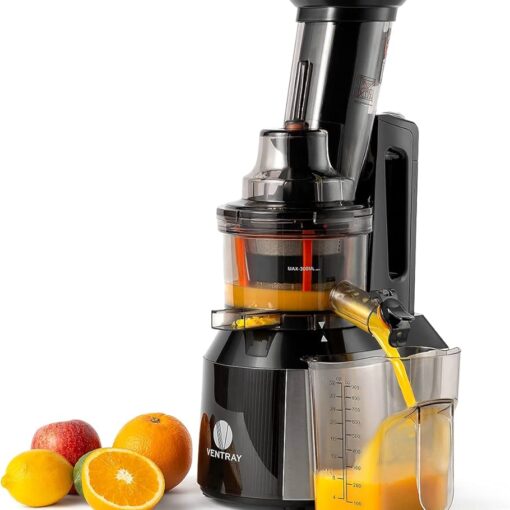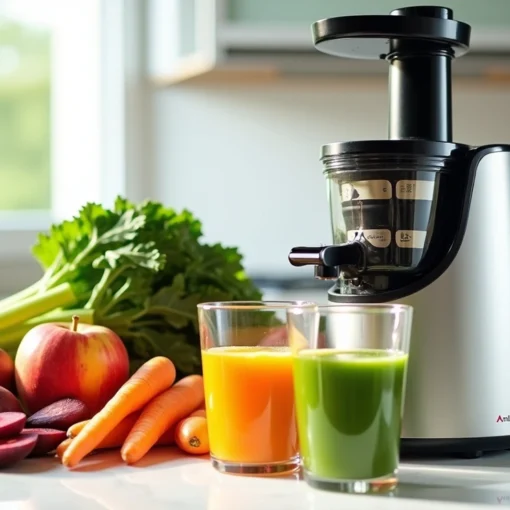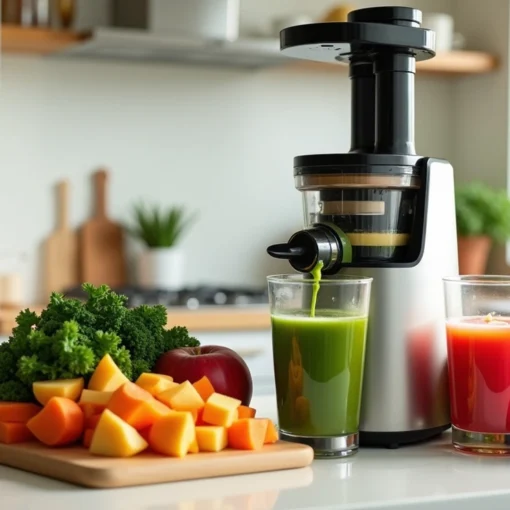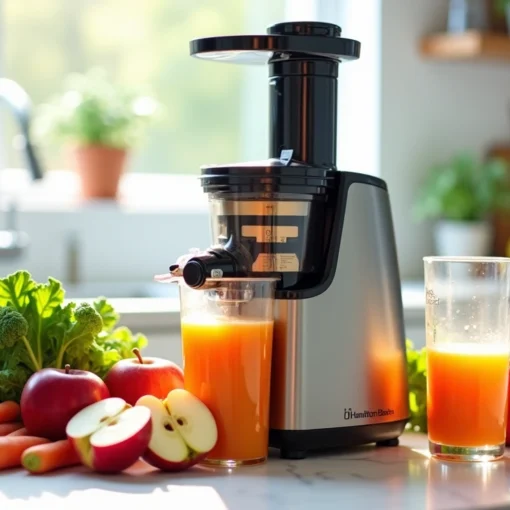
Cuisinart juicers provide powerful centrifugal extraction, durable construction, and strong value between $80 and $150. Models like the CJE-1000P1 deliver high juice yield and handle hard produce efficiently, while the CJE-500 Compact Juicer fits small kitchens. Most models include dishwasher-safe parts for easy cleaning, though some units operate loudly and require more counter space.
Unboxing the Cuisinart Juicer
When my Cuisinart Juice Extractor arrived, I couldn’t wait to see what was inside. This sleek kitchen appliance comes packaged securely, protecting its stainless steel finish during shipping.
What comes in the box
Opening the box reveals everything needed to start juicing immediately. The main component is the die-cast and stainless steel juicer housing that gives the Cuisinart juice extractor its premium appearance. Alongside this, you’ll find:
- A generous 2-liter pulp container for collecting waste
- A 1-liter juice pitcher for catching your fresh juice
- A specially designed cleaning brush
- A recipe booklet with juicing ideas
The unit comes with Cuisinart’s exclusive easy unlock and lift system that makes assembly straightforward. Moreover, the juicer features a foam management filter disk and an anti-drip adjustable flow spout to keep your countertops clean.
Initial impressions of build quality
Straight out of the box, the Cuisinart juicer makes a strong first impression. The silver and black die-cast housing feels remarkably solid – heavier than expected at nearly 15 pounds. This substantial weight actually proves beneficial, preventing any wobbling during operation.
What immediately catches the eye is the large 3-inch feed tube. This thoughtful design element eliminates much of the prep work typically associated with juicing, as it can accommodate whole fruits and vegetables without extensive chopping.
The overall dimensions measure 14.92″L × 9.37″W × 16.46″H, creating a commanding presence on the countertop without overwhelming your kitchen space. The stainless steel construction feels premium to the touch, suggesting durability for long-term use.
Notably, all removable parts are dishwasher-safe and BPA-free, which addresses both convenience and health concerns. During initial handling, the 5-speed dial with its blue LED light ring adds a modern touch to this powerful 1000-watt machine.
How easy is it to set up and use?
Setting up a new kitchen appliance can sometimes feel like solving a puzzle, but the Cuisinart Juice Extractor makes this process remarkably straightforward.
Assembly and first-time setup
Getting started with the Cuisinart juicer requires minimal effort. Initially, I had to remove all packaging materials and promotional labels from the unit. The manufacturer recommends keeping the box and packing materials for possible future use—a thoughtful suggestion for seasonal juicers.
First-time setup includes a quick cleaning of all removable parts. The cover, pusher, pulp container, juice pitcher, filter basket, and filter bowl can be thoroughly cleaned either by hand or placed in the dishwasher. However, never submerge the motor housing in water—simply wipe it with a damp cloth.
The assembly process follows a logical sequence:
- Place the filter bowl on the motor housing
- Insert the foam management filter disk
- Position the mesh filter basket firmly in place
- Attach the cover with the feed tube facing back
- Make sure the handle lock is in the “open” position
- Slide the food pusher down the feed tube
- Position the pulp container under the cover
- Place the juice pitcher under the spout
Plug-and-play operation
Once assembled, operating the Cuisinart juice extractor couldn’t be simpler. The 5-speed control dial is exceptionally easy to use, allowing me to adjust settings based on what I’m juicing—from soft berries to leafy greens to crunchy apples.
The unit features a convenient 3-inch feed tube that easily handles whole fruits and vegetables, significantly reducing prep time. Furthermore, the unique adjustable flow spout prevents drips and spills, keeping my countertops clean—a feature I particularly appreciate.
Consumer Reports rated this model “Good” for ease of assembly, disassembly, and cleaning. They also rated it “Excellent” for convenience based on feed tube size, anti-drip spout, and included juice container brush.
Using the adjustable pulp filter
One standout feature is the customizable pulp content in your juice. The exclusive filter basket effectively reduces foam, resulting in smoother juice. Depending on your preference, you can select different pulp settings, accommodating everyone in the family.
The pulp control settings are straightforward to adjust—simply rotate the reamer according to the arrows to select low, medium, or high pulp. This versatility means I can create anything from smooth, pulp-free orange juice for my kids to fiber-rich drinks with maximum nutrition for myself.
Juicing performance across different produce
After extensive testing, I’ve found the Cuisinart juicer’s performance varies dramatically depending on what you’re juicing. The machine’s 5-speed control dial allows adjustment for everything from soft berries to leafy kale to crunchy apples.
Citrus fruits: oranges, lemons, grapefruits
With citrus fruits, the Cuisinart delivers acceptable but not outstanding results. When juicing oranges, it produced a respectable 56% yield, which is solid though not exceptional. For lemons, it managed to extract about 140 mL from two medium-sized fruits, slightly outperforming some competitors.
The juicer truly shines with grapefruits, yielding approximately 400 mL from two large grapefruits. Nevertheless, I noticed frequent cleaning of the pulp screen was necessary during this process.
Leafy greens and soft produce
Here’s where the Cuisinart shows limitations. While the juicer thoroughly processes kale, the overall yield for recipes combining leafy greens with other ingredients remains disappointingly low at about 58%.
For soft produce like berries, results are inconsistent. The juicer performed admirably with a beetroot, blueberry, and strawberry recipe, scoring the fourth highest among tested juicers.
Hard fruits and vegetables
The Cuisinart handles dense produce reasonably well. It achieved average results with carrot combinations, producing a 41% yield with carrot, ginger, and lemon. The 3-inch feed tube easily accommodates whole apples and other substantial pieces.
Juice yield and pulp content
One noteworthy observation: despite sometimes lower liquid yields, the Cuisinart consistently produces particularly dry pulp, suggesting it extracts substantial amounts of available juice from what it processes. The unique filter basket effectively reduces foam, resulting in smoother juice consistency.
First among its strengths is the adjustable flow spout that prevents messy countertops. Consequently, even if yields aren’t always impressive, the juicing experience remains relatively clean and hassle-free.
Cleaning, storage, and long-term use
The maintenance routine is an essential factor in my Cuisinart juicer review – especially since proper cleaning directly affects long-term performance.
Dishwasher-safe parts
Fortunately, all removable parts of the Cuisinart juice extractor are dishwasher-safe. This includes the pulp container, juice container, cover, pusher, and filter basket assembly. First and foremost, these parts can be placed on the top rack of your dishwasher for convenient cleaning. Certainly, this feature has made cleanup remarkably easy – essentially “a breeze” according to many users.
Manual cleaning tips
For best results, clean immediately after each use. Dried fruit and vegetable residue hardens, making cleanup much more difficult. When cleaning manually:
- Unplug the juicer and disassemble following instructions
- Rinse removable parts with cold water first
- Use hot, sudsy water and the included cleaning brush
- Be cautious with the filter basket as the blades are very sharp
Generally, the motor housing should never be immersed in water or placed in the dishwasher. Instead, wipe it with a damp cloth and mild detergent, avoiding ammonia or scouring powders that can damage the finish.
Storage footprint and durability over time
The compact design makes this juicer perfect for countertop use or cabinet storage. Many users appreciate its size, noting it “will fit in any cabinet”. Subsequently, when storing in an appliance garage, always unplug the unit to prevent fire hazards.
Conclusion
After thorough testing of the Cuisinart juice extractor, the verdict remains mixed. Though marketed as potentially “the best juicer you can buy,” this machine clearly comes with both strengths and limitations that deserve careful consideration before purchase.
The juicer undoubtedly impresses with its sturdy die-cast and stainless steel construction, giving it a premium feel that suggests durability. Additionally, the 3-inch feed tube stands out as a genuinely helpful feature, significantly reducing prep time by accommodating whole fruits and vegetables. Furthermore, the adjustable pulp filter offers welcome customization that many competing juicers lack.
Nevertheless, performance varies dramatically depending on what you’re juicing. While the machine handles citrus fruits reasonably well and produces notably dry pulp, it struggles with leafy greens and delivers inconsistent results with various produce combinations. This inconsistency might frustrate users hoping for reliable performance across all ingredients.