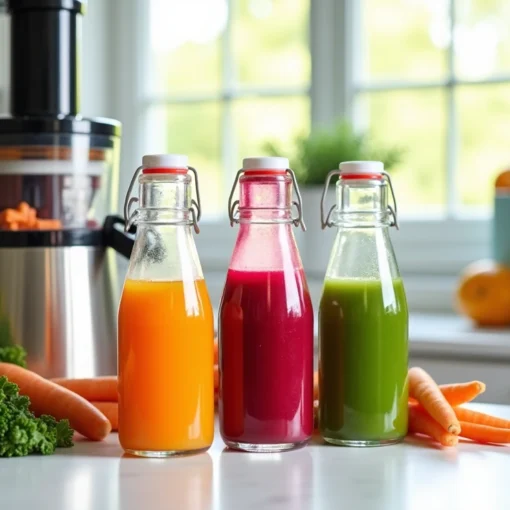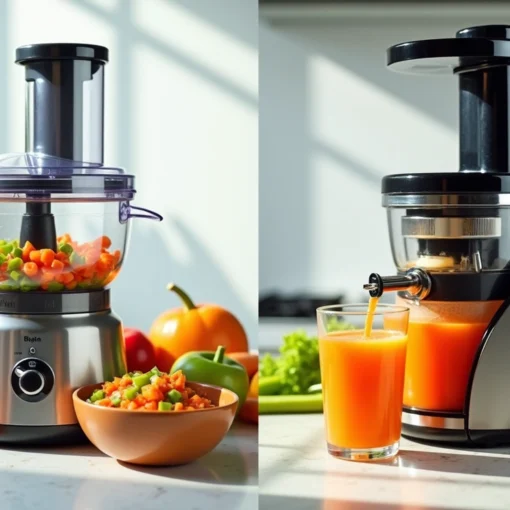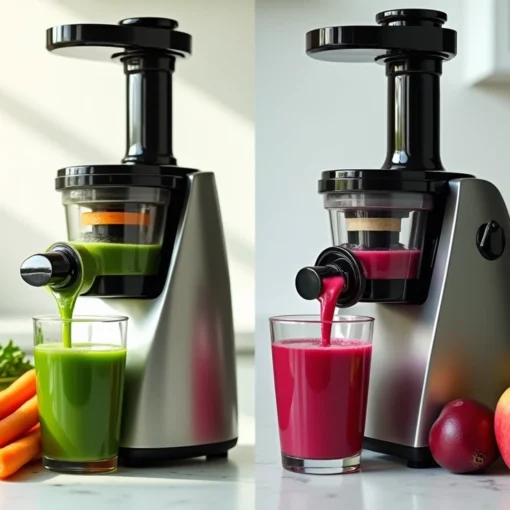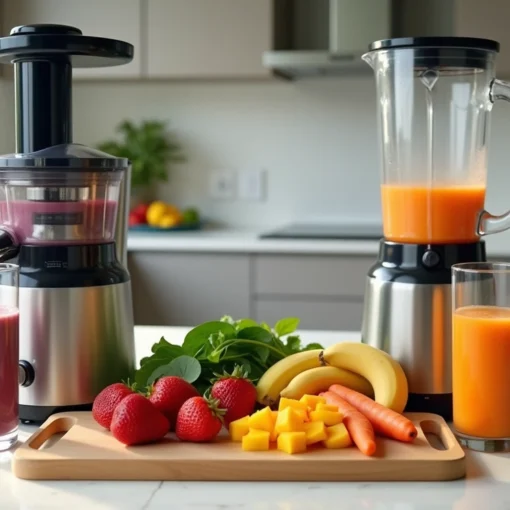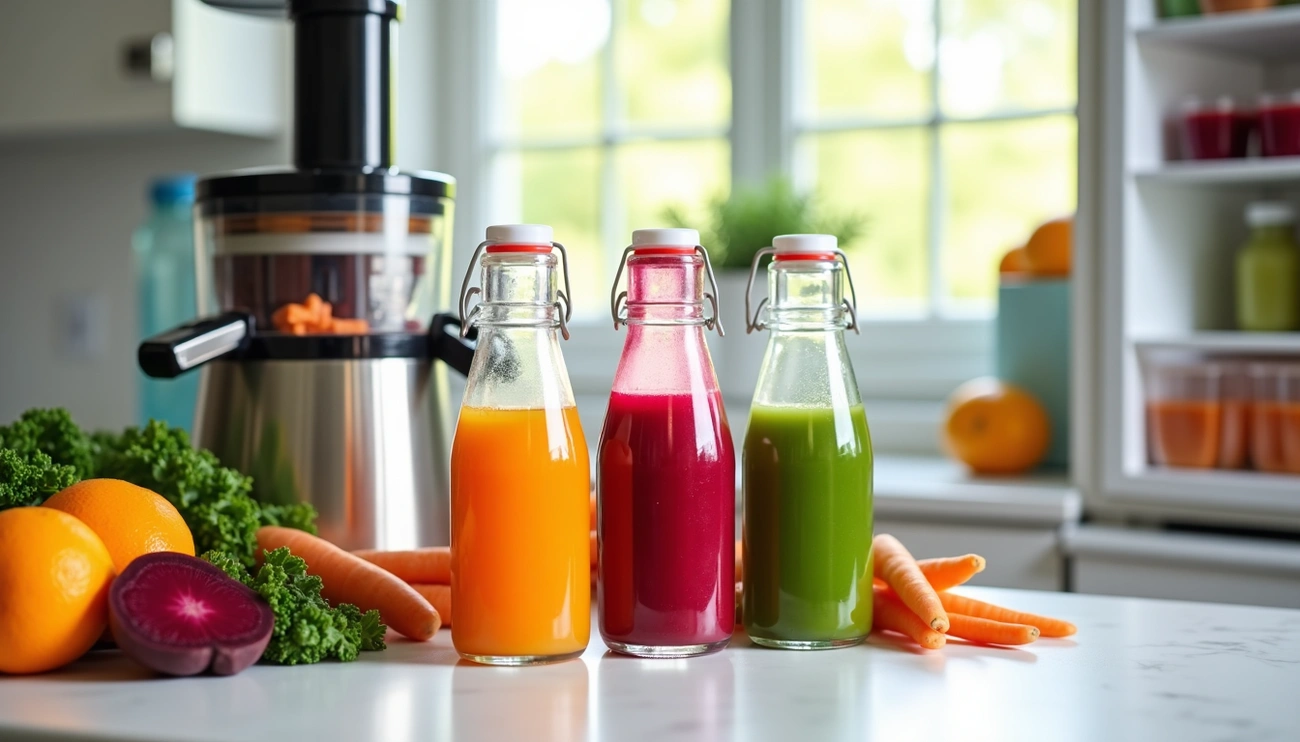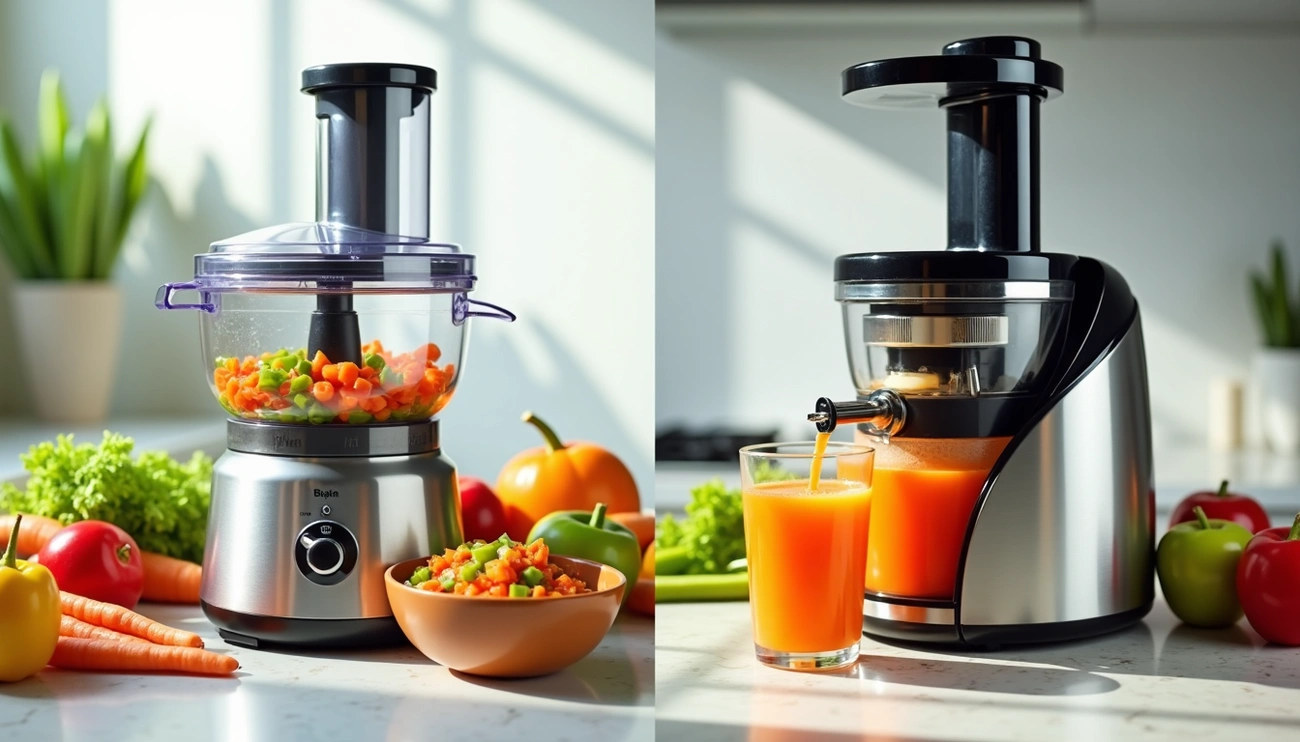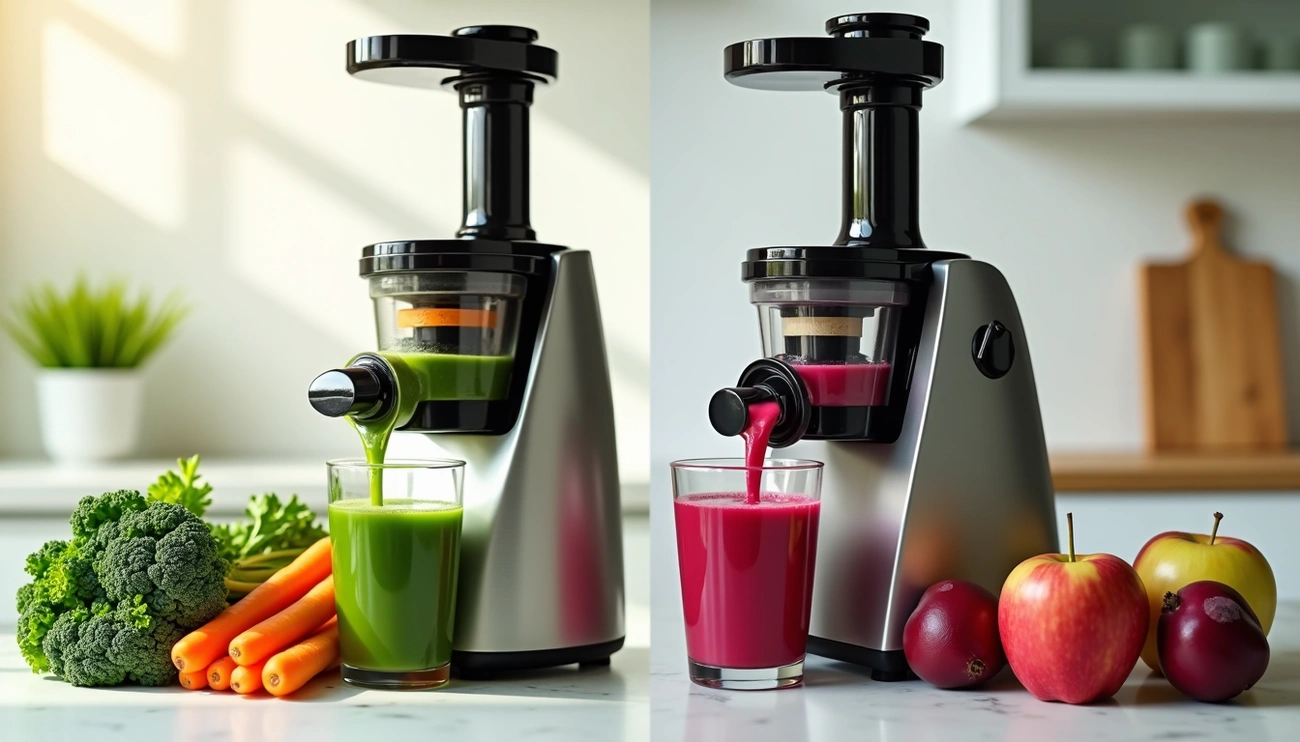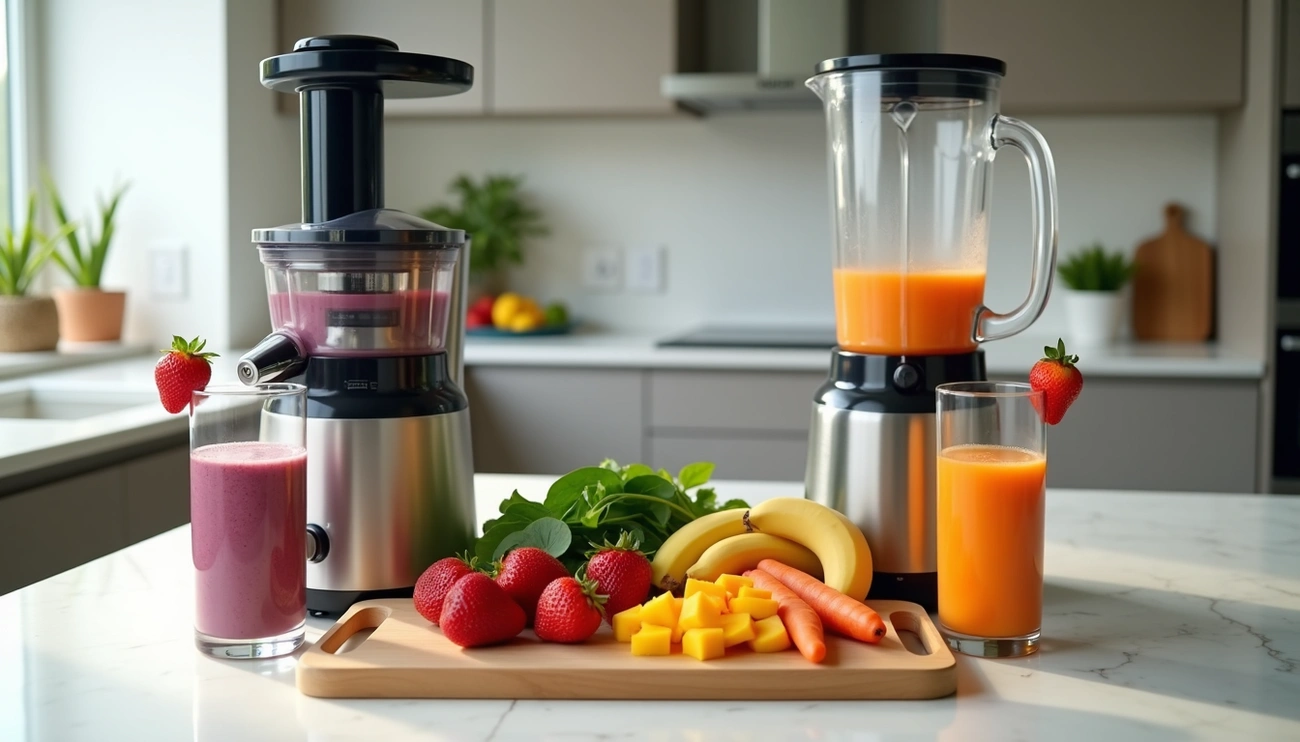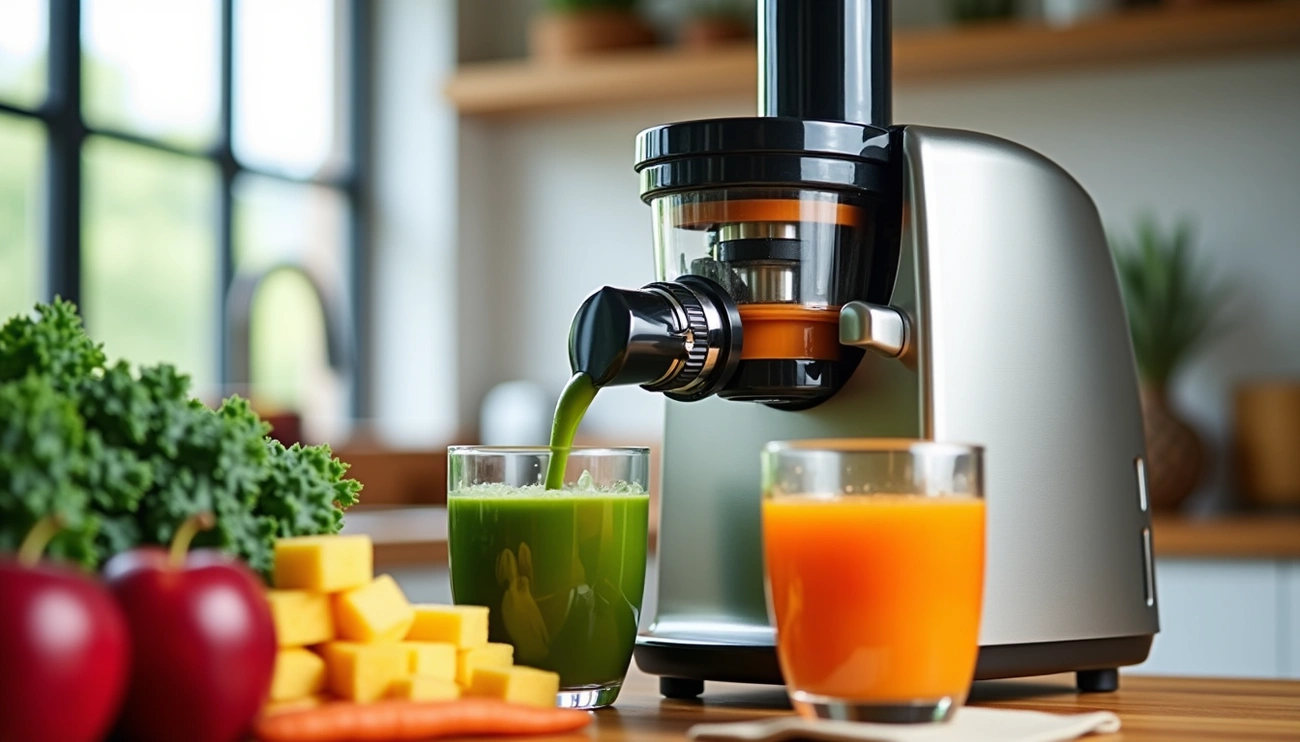
A cold press juicer is a masticating juicer that extracts juice by slowly crushing and pressing fruits and vegetables with an auger instead of high-speed blades. This process generates minimal heat, preserves heat-sensitive nutrients and enzymes, increases juice yield, reduces foam, and extends shelf life up to 72 hours when refrigerated.
What does a cold press juicer do?
A true cold press juicer extracts juice through a unique method that preserves more nutrients and flavor than traditional juicing approaches. Unlike the spinning blade mechanisms found in many kitchen appliances, these specialized machines apply thousands of pounds of pressure to squeeze out every drop of liquid from your produce.
How cold press juicing works
The fundamental principle behind cold press juicing lies in its gentle extraction process. These machines use hydraulic pressure to squeeze fruits and vegetables, extracting juice without generating significant heat. This careful approach minimizes air exposure during juicing, consequently preserving more antioxidants and heat-sensitive nutrients. The gentle extraction additionally produces juice that’s notably cleaner and purer – even naturally sweeter since it contains almost no pulp.
The two-step process: grind and press
Authentic cold press juicing follows a distinct two-stage method. Initially, the machine shreds or compresses fruits and vegetables into a pulp. For commercial production, this often involves a steel rotating disk. Following this preparation, the second stage begins – the hydraulic pressing. During this phase, the shredded produce faces extreme pressure between two plates. This powerful compression forces the juice to drip into a collection tray while leaving behind the fiber content. According to experts, only juicers that perform both grinding and pressing qualify as genuine cold press machines.
Why it’s called ‘cold press’
Despite what the name might suggest, “cold” doesn’t refer to refrigerated juice or chilled machinery. Instead, this term indicates that no heat is generated during the extraction process. Traditional centrifugal juicers operate with high-speed spinning blades that create heat through friction. This thermal energy can destroy heat-sensitive vitamins and enzymes – vitamin C, for instance, begins breaking down immediately upon heat exposure. Furthermore, heat accelerates oxidation, which diminishes nutritional value. The cold press method essentially preserves these delicate compounds by avoiding heat generation altogether, maintaining the juice in its most nutrient-rich state.
Cold press juicer vs regular juicer
Understanding the various juicer types helps clarify what a cold press juicer truly is. Let’s explore how these machines differ in their approach to extracting juice.
Centrifugal juicers: fast but heated
Centrifugal juicers dominate the home juicing market primarily because they’re affordable and quick. These machines utilize fast-spinning metal blades that shred fruits and vegetables at speeds between 6,000-14,000 RPM. The centrifugal force then pushes the juice through a mesh filter, separating it from the pulp.
The major drawback? This high-speed process generates heat through friction, which can reduce the nutritional value of your juice. Moreover, the rapid spinning introduces more oxygen, causing faster oxidation that leads to separation, foam formation, and shorter shelf life. For those who enjoy leafy greens, centrifugal models struggle to extract juice efficiently from these ingredients.
Masticating juicers: slow but not pressed
Often marketed as “cold press juicers,” masticating juicers operate at dramatically slower speeds—typically 80-100 RPM. These machines use an auger that slowly crushes produce and pushes it against a screen. This gentler approach generates minimal heat and introduces less air into the juice.
Although masticating juicers yield more juice and preserve more nutrients than centrifugal models, they aren’t true cold press machines. The juice contains pulp and separates relatively quickly after production. Nevertheless, these machines offer quieter operation, handle leafy greens effectively, and produce juice that lasts longer.
True cold press vs masticating: key differences
Despite marketing claims, most “cold press” juicers on the market are actually masticating juicers. A true cold press juicer follows a distinct two-stage process: first grinding produce into pulp, then applying thousands of pounds of hydraulic or pneumatic pressure to extract juice.
The key distinction is the pressing action. Masticating juicers crush and squeeze but don’t actually press the juice. True hydraulic press juicers are the only machines that contain an actual press mechanism. This distinction matters because genuine cold press juicers extract more nutrients, produce almost no foam, create minimal oxidation, and yield juice that’s 99% liquid with less than 1% pulp. Their juice typically lasts 3-5 days refrigerated with minimal separation.
Benefits of using a cold press juicer
The practical benefits of cold press juicers explain why they’ve become increasingly popular among health enthusiasts. Beyond just extracting juice, these machines offer several advantages that make them worth considering.
Higher juice yield and less waste
One of the most compelling reasons to choose a cold press juicer is its remarkable efficiency. Research shows these machines extract substantially more juice from the same amount of produce. In fact, a study from the Izmir Institute of Technology found that for pineapple, cold press juicers yielded an impressive 92% juice compared to only 47% from centrifugal methods. This ultimately translates to better value for money as you’ll need less produce to make the same amount of juice.
Longer shelf life of juice
Cold-pressed juice typically remains fresh longer than juice made with conventional methods. When properly refrigerated at 4°C, cold-pressed juice maintains its bioactive compounds and antioxidant capacity for up to 48 hours with no significant decline. In optimal conditions, juice from a true cold press juicer can last 3-5 days, occasionally up to 7 days. Commercial operations often use HPP (High Pressure Processing) to extend shelf life even further—30 to 60 days for some varieties.
Better taste and texture
What’s more, cold-pressed juice simply tastes better. The extraction process creates smoother juice with minimal foam and separation. Many enthusiasts describe the flavor as more vibrant and pure, primarily because the slow process reduces oxidation that can affect taste.
More nutrients and enzymes retained
Perhaps most importantly, cold press juicers preserve more of what makes juice nutritious:
- Heat-sensitive vitamins like A and C
- Essential minerals including potassium and magnesium
- Natural enzymes that aid digestion
- Antioxidants such as polyphenols and flavonoids
The absence of heat in the extraction process is key to this preservation, as many nutrients begin breaking down immediately upon heat exposure.
Choosing the right cold press juicer
Selecting an ideal cold press juicer requires careful consideration of several factors, especially as demand for these appliances grows at 8% annually.
What to look for in a juicer
When shopping for a cold press juicer, examine the feed chute size first—wider openings (around 3 inches) minimize prep time. Multiple speed settings let you juice different produce optimally; slower speeds work perfectly for soft fruits like grapes, whereas higher speeds handle firmer vegetables. Also consider noise level, as cold press juicers generally run longer than centrifugal types. Look for intuitive controls and stackable parts for easier storage.
Best models for beginners
For newcomers to juicing, models like the Nutribullet Slow Juicer offer excellent value with intuitive single-button operation. The Ninja NeverClog similarly provides accessible entry points with dishwasher-safe parts and quiet operation. The Hamilton Beach juicer stands out particularly for affordability and minimal learning curve.
Cold press juicers for leafy greens
Specifically for leafy greens, both masticating and twin gear juicers outperform centrifugal models. Omega’s specialized models extract maximum nutrients from kale, spinach, and wheatgrass.
Ease of cleaning and maintenance
Ultimately, your juicer’s usability depends largely on cleaning convenience. Seek models with fewer components or dishwasher-safe parts. Some manufacturers now offer mesh-free filters that rinse easily under tap water. Remember to clean your juicer after each use to prevent buildup and extend its lifespan.
Conclusion
Cold press juicers stand out as remarkable appliances for anyone passionate about maximizing nutritional benefits from fruits and vegetables. Throughout this article, we’ve discovered that true cold press juicers follow a distinct two-stage process – grinding produce into pulp before applying substantial hydraulic pressure to extract juice. This method preserves significantly more nutrients compared to other juicing techniques.
The differences between juicer types matter greatly for your health goals. While centrifugal juicers offer speed and affordability, they generate heat that diminishes nutritional value. Masticating juicers perform better but still don’t match genuine cold press technology, which extracts juice with minimal heat and oxidation.
Benefits of choosing a cold press juicer certainly justify the investment for many households. Higher juice yields mean less produce waste and better value. Cold-pressed juice lasts significantly longer – up to a week when refrigerated properly. The taste also proves superior, with smoother texture and brighter flavors that highlight the natural qualities of your ingredients.