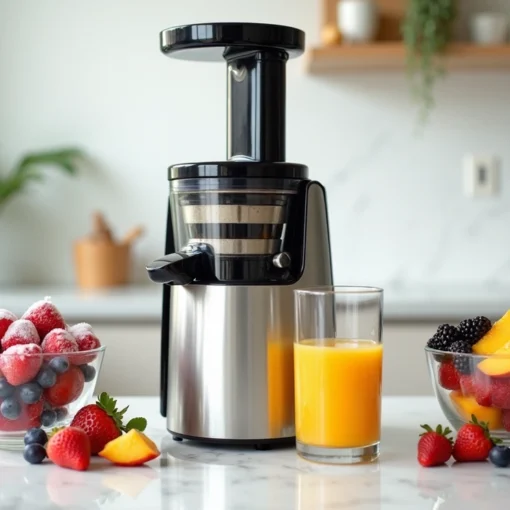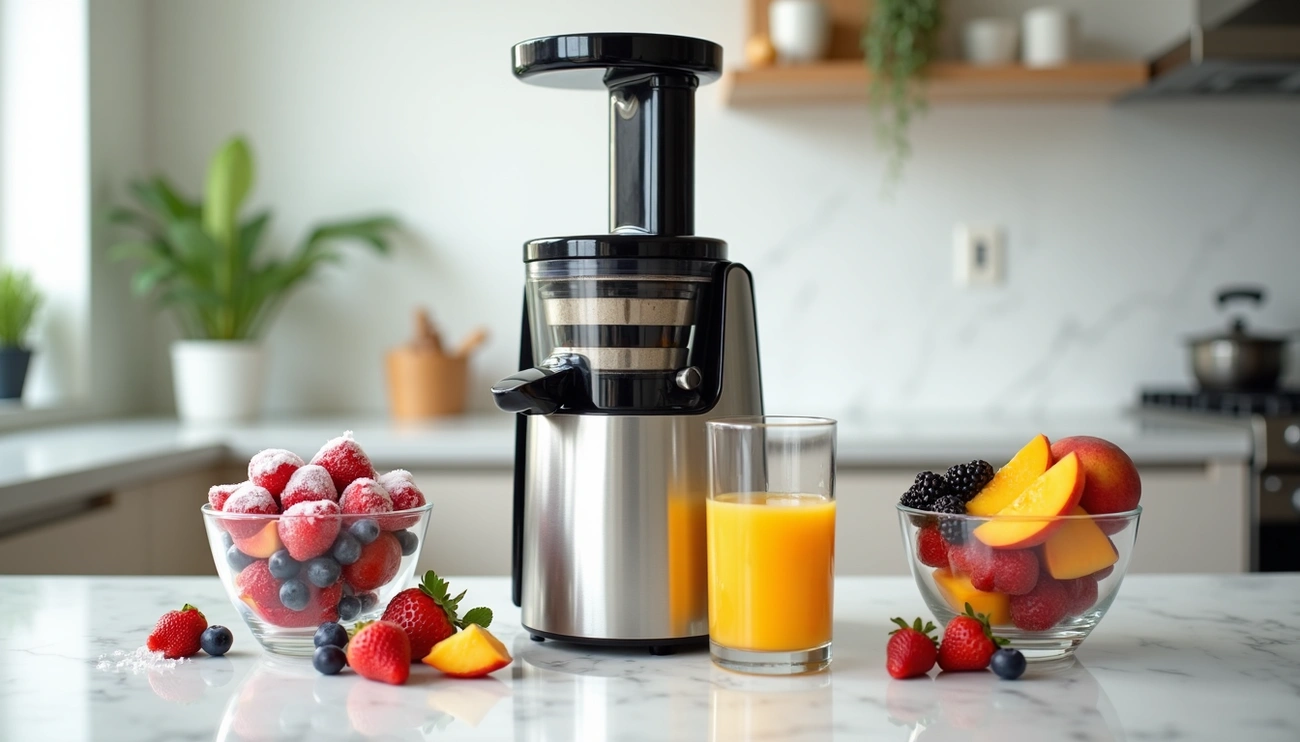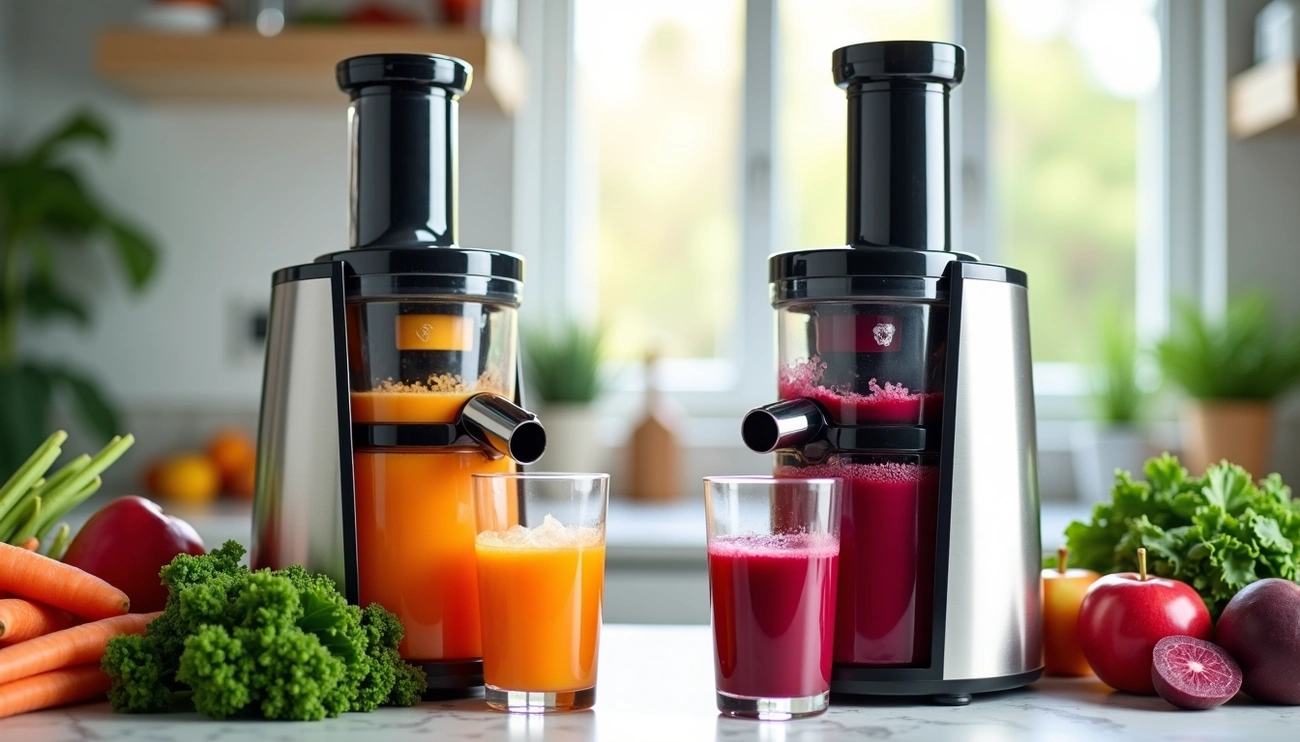
A slow juicer is a cold-press juicer that crushes and presses fruits and vegetables at 30–200 RPM to extract juice. It uses a slow-rotating auger instead of high-speed blades, which reduces heat and oxidation. This process increases nutrient retention, improves juice yield, and produces less foam.
What is a Slow Juicer?
The slow juicer has been gaining popularity among health enthusiasts for its unique approach to juice extraction. Let’s explore what makes this kitchen appliance special and how it works.
Definition and basic concept
A slow juicer, fundamentally, is a specialized kitchen appliance that extracts juice through gentle pressing and crushing of fruits and vegetables. Often referred to as a “masticating” or “cold-press” juicer, these terms all point to the same technology. The name “masticating” comes from the word “masticate,” which means “to chew” – perfectly describing how these juicers process food.
At the heart of every slow juicer is an auger – a sturdy, spiral-shaped component that gradually crushes produce against a mesh screen or strainer. This heavy auger serves as the workhorse of the machine, applying steady pressure to extract juice while separating it from the pulp.
What truly sets these juicers apart is their operating speed. While centrifugal juicers operate at blistering speeds of 6,000-15,000 RPM, slow juicers function at a much gentler pace – typically between 43-90 RPM for Hurom models and around 50-60 RPM for other brands. Through this process, juice flows out through one outlet while pulp exits through a separate path.
How it differs from regular juicers
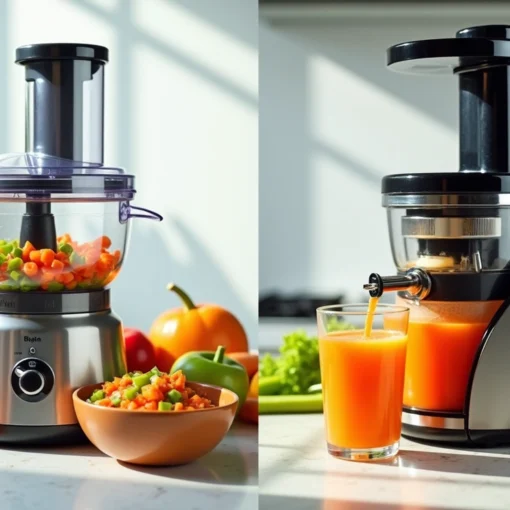
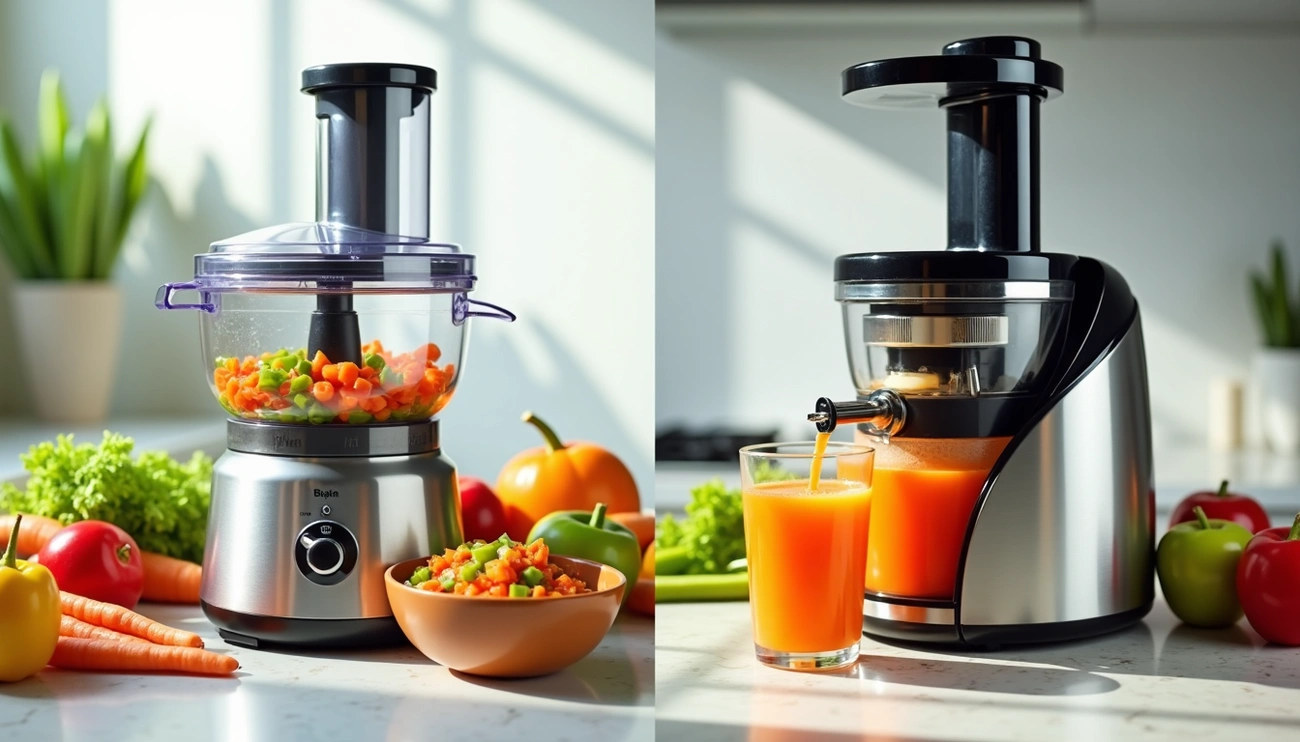
The primary distinction between slow juicers and regular (centrifugal) juicers lies in their extraction method. Whereas centrifugal juicers use high-speed blades to shred ingredients, slow juicers employ a crushing and pressing action.
This difference in mechanism creates several notable advantages:
- Heat generation: Regular juicers generate significant heat due to their high-speed operation, potentially damaging nutrients. Conversely, slow juicers produce minimal heat, preserving more vitamins, minerals, and enzymes.
- Oxidation levels: The slower operation introduces less oxygen into the juice, resulting in reduced oxidation. This means your juice stays fresher longer with less separation and foam.
- Juice yield: Slow juicers typically extract more juice, especially from leafy greens, wheatgrass, and soft fruits. The pulp that remains is usually drier, indicating more efficient extraction.
- Versatility: Beyond standard juicing, slow juicers excel at processing a wider range of ingredients, including leafy vegetables, wheatgrass, and even nuts.
Despite their name, modern slow juicers are reasonably efficient, capable of producing juice within seconds and operating continuously for 30-45 minutes before requiring a break.
How Do Slow Juicers Work?
The mechanical genius behind slow juicers reveals itself once we look at their internal workings. Understanding how these machines function helps explain why they produce such nutrient-rich juice.
The role of the auger and low RPM
At the heart of every slow juicer lies an auger – a spiral-shaped component that serves as the machine’s primary workhorse. This heavy-duty part crushes fruits and vegetables against the juicer walls, mimicking our natural chewing process. Hence the term “masticating” juicer, derived from the word “masticate” which means “to chew”.
Most slow juicers operate at remarkably low speeds – typically between 40-60 RPM (revolutions per minute). This deliberately gradual pace serves a crucial purpose: it prevents heat generation during the juicing process. By avoiding friction-induced heat, slow juicers preserve the valuable enzymes and nutrients that would otherwise be damaged at higher temperatures.
Cold press mechanism explained
The cold press mechanism works through a two-stage process. First, the auger crushes the produce into a pulp, breaking down cell walls. Then, it presses this pulp against a fine mesh screen or strainer.
This gentle approach yields significant advantages:
- Minimizes oxidation and heat damage to nutrients
- Preserves enzymes that would otherwise be destroyed by heat
- Extracts significantly more juice than centrifugal methods – up to 15-30% more according to some studies
As the name suggests, “cold press” indicates no significant heat is generated during extraction, allowing the juice to retain more of its nutritional value.
Juice and pulp separation process
Following extraction, the mechanism efficiently separates juice from pulp. As the auger crushes and presses ingredients, juice flows through the perforated juicing screen while the pulp is simultaneously pushed into a separate container.
The efficiency of this separation is remarkable – slow juicers typically produce very dry pulp, indicating maximum juice extraction. Furthermore, the juice flows through an internal mesh filter, ensuring a smooth consistency.
The entire process requires minimal preparation since most fruits and vegetables don’t need to be cut before juicing – only large items like pineapples or melons need halving. This makes the slow juicing process not just nutritionally superior but also surprisingly convenient.
Slow Juicer vs Regular Juicer
When comparing slow juicers to regular centrifugal models, four key differences stand out. Let’s examine these distinctions that might influence your purchasing decision.
Speed and heat generation
The most obvious contrast lies in operational speed. Centrifugal juicers operate at blistering 6,000-15,000 RPM, whereas slow juicers function at just 40-80 RPM. This speed difference isn’t merely about processing time – it fundamentally impacts juice quality. Despite common misconceptions, research indicates that centrifugal juicers don’t generate enough heat to significantly destroy nutrients. Nevertheless, studies show that centrifugal juicers can raise juice temperature by over 9°F (5°C), while slow juicers limit temperature increases to below 3°F (1.67°C).
Nutrient retention and oxidation
Vitamin retention varies notably between these technologies. After 24 hours of storage, masticating juicers retain 82% of vitamin C compared to 67% in centrifugal juicers. Moreover, slow-pressed juice maintains 94% of fresh produce antioxidant levels versus 78% in centrifugal juice. The rapid spinning in centrifugal models incorporates more air, accelerating oxidation and causing faster discoloration.
Juice yield and pulp dryness
Concerning yield, the difference is substantial. Consumer Reports testing revealed masticating juicers extract 20% more juice from carrots, 60% more from spinach, and an astounding 467% more from wheatgrass than centrifugal models. One study found slow juicers extracted 92% juice from pineapple versus only 47% from centrifugal juicers.
Noise and ease of use
Centrifugal juicers operate at 75-85 decibels (comparable to city traffic) while masticating models run quietly at 45-55 decibels (equivalent to normal conversation). Regarding convenience, centrifugal juicers work faster but process leafy greens poorly.
Slow Juicer Benefits for Health and Lifestyle
The health benefits of slow juicers extend far beyond just extracting liquid from produce. These specialized machines deliver impressive advantages for both your wellbeing and environmental footprint.
More vitamins and enzymes preserved
Slow juicers operate at low speeds (40-80 RPM), generating minimal heat and reducing oxidation that would otherwise destroy nutrients. Scientific research shows cold-pressed juice retains up to 94% of enzymes compared to only 58% in standard centrifugal juicers. Similarly, vitamin C preservation after 24 hours of refrigeration reaches 87% in slow-juiced beverages versus 48% in high-speed juices. This preservation extends to antioxidants too, with slow-pressed juices containing 45-50% more antioxidants than their high-speed counterparts.
Better digestion and detox support
The gentle extraction process preserves digestive enzymes that support gut health. Slow juicers produce beverages rich in soluble fiber that promotes beneficial gut bacteria. Fresh juice from these machines contains pectin from apples and aloe vera compounds that soothe and heal the gut lining. Ginger and turmeric, easily processed in slow juicers, offer powerful anti-inflammatory properties that support detoxification.
Improved taste and longer shelf life
Slow-juiced beverages maintain freshness longer primarily because of reduced oxidation. Under proper refrigeration, these juices typically last 3-5 days, occasionally reaching 7 days. The cold extraction method prevents browning and separation common in regular juices. Additionally, slow-pressed juices retain their vibrant colors and richer flavors due to minimal air incorporation during processing.
Supports immune and heart health
The preserved nutrients directly benefit immune function. Vitamin C supports white blood cell production while antioxidants combat free radicals. Beetroot juice, effectively extracted by slow juicers, increases nitric oxide levels that expand blood vessels and lower blood pressure. Regular consumption of properly preserved juice can help strengthen natural defenses against common illnesses.
Less food waste and more sustainability
Slow juicers extract significantly more juice than centrifugal models – up to 90% of available juice versus 70%. This higher yield means getting more nutrition from the same amount of produce. Furthermore, the leftover pulp emerges drier, making it ideal for composting or incorporating into recipes. This efficient extraction reduces food waste while maximizing the nutritional value of every fruit and vegetable purchased.
Conclusion
Slow juicers clearly stand out as superior alternatives to their centrifugal counterparts. Throughout this article, we’ve seen how these machines operate at a fraction of the speed—just 30-200 RPM compared to the 10,000+ RPM of regular juicers. This dramatic difference results in juice with higher nutritional value, better taste, and longer shelf life.
The health benefits speak for themselves. Your body receives significantly more vitamins, enzymes, and antioxidants when consuming slow-juiced beverages. Additionally, the improved nutrient preservation supports immune function, heart health, and digestive wellness. Many health enthusiasts therefore consider slow juicers essential kitchen investments rather than optional appliances.
Practical advantages extend beyond nutritional benefits. The quieter operation makes early morning juicing possible without disturbing your household. The improved juice yield means you’ll spend less money on produce while getting more nutrition from each fruit and vegetable. Fresh, vibrant juice without separation or excessive foam simply tastes better, which encourages consistent consumption.